
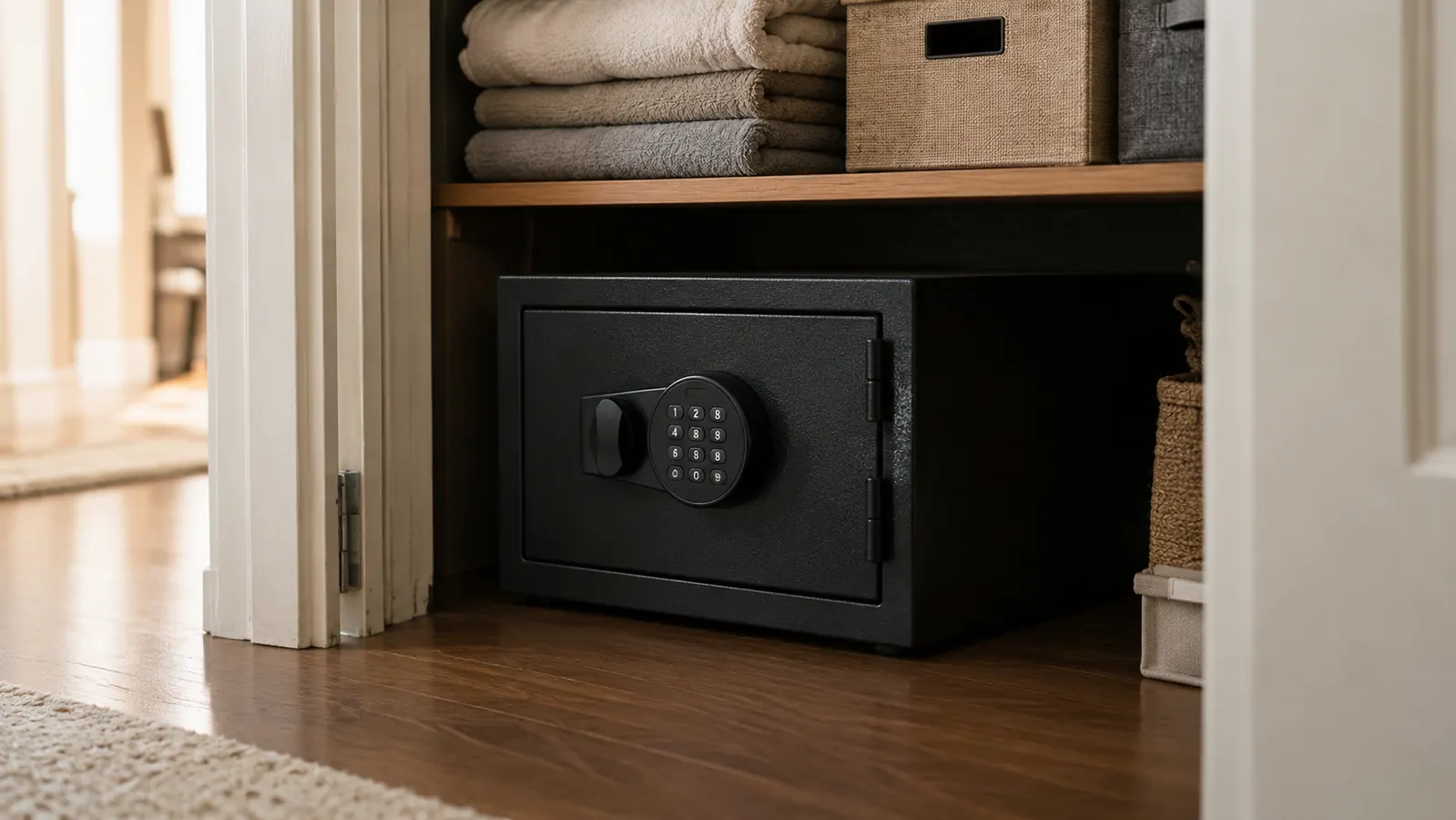
After 25 years as a homeowners-insurance claims adjuster, I have walked through a lot of houses after the worst day of someone's life. I have seen the kitchen that was the only room that burned, with the bedroom untouched. I have seen the bedroom gutted and the kitchen fine. And I have seen what people fish out of the rubble: the fireproof safe that held their deed, their passports, their insurance policies, and the paperwork that made the next six months bearable. That is why, about two years ago, I replaced the plain metal lockbox in my hall closet with a SentrySafe 1-hour fireproof safe with a digital keypad. This is the long-term review I wish I had read before I bought it.
The SentrySafe has been bolted to the floor of my hall closet in Albuquerque ever since. It holds the house deed, the car titles, our passports, the insurance policies, some emergency cash, and the backup hard drive with our family photos. It has been through two New Mexico summers and two winters, one move of everything on the shelf above it, and more keypad entries than I can count. Here is how it actually holds up.
The Quick Verdict
The SentrySafe 1-hour fireproof safe is the right next step up from a lockbox: real fire protection, a keypad that still works after thousands of entries, and enough space for the documents that would be painful to replace. It is not a burglar vault and it is not waterproof, so buy it for what it is.
Amazon Check Today's Price →Stop trusting the lockbox that would not survive a house fire
The SentrySafe 1-hour fireproof digital keypad safe gives your deed, titles, and passports a fighting chance. See today's price on Amazon.
Amazon Check Today's Price on Amazon →How I've Used It
My husband Ray and I live in a single-story ranch house with an attached garage. Our hall closet is the catch-all: coats, the vacuum, a shelf of photo albums, and now the safe on the floor in the back corner. I chose that spot for a simple reason. In the houses I inspected after fires, the hall closet was usually one of the last places to burn. It is an interior space with no exterior wall, so it gets heat later than a bedroom or living room wall. That is not a guarantee, and I would never tell anyone it is. It is just playing the odds.
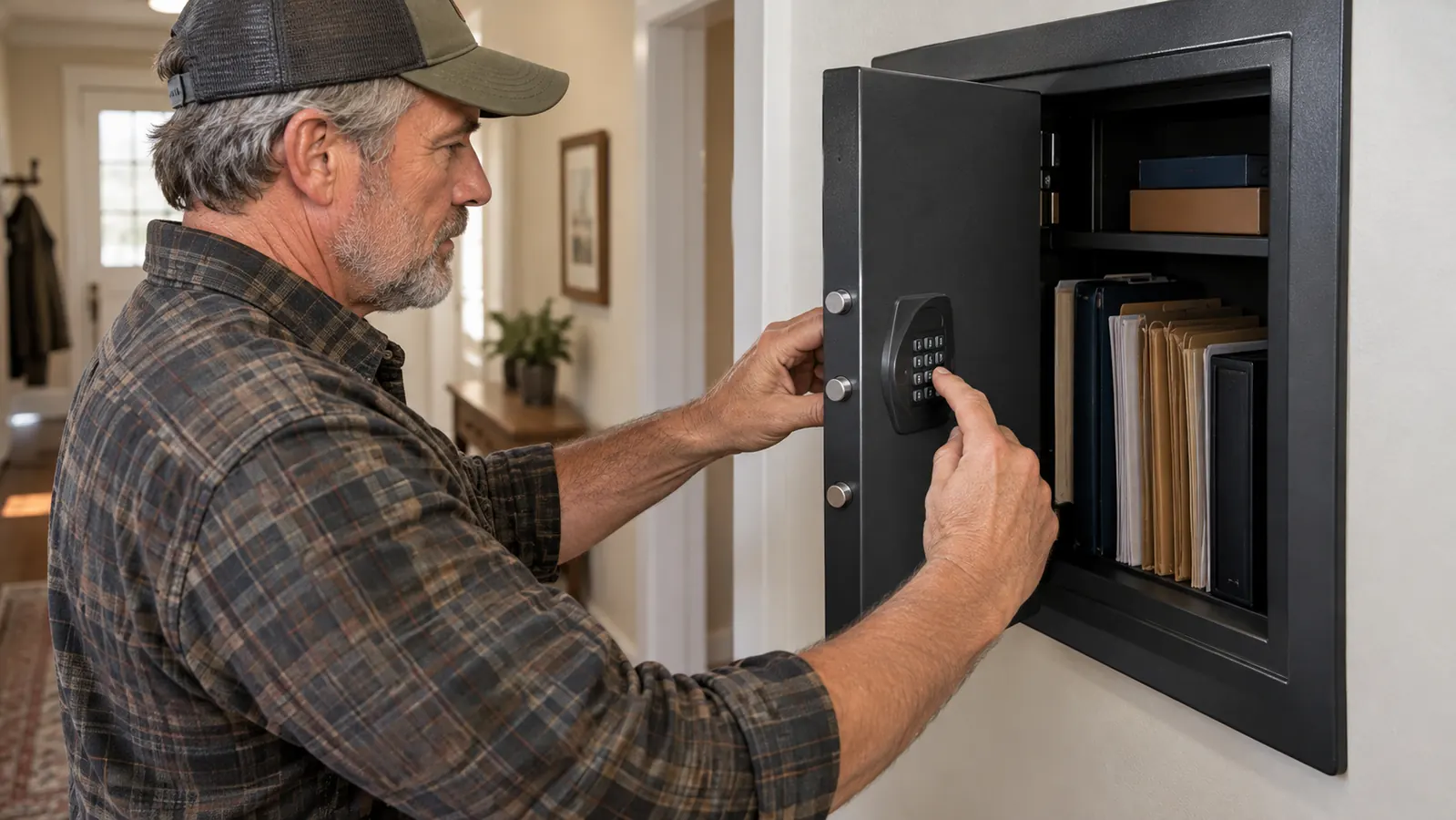
The safe came with mounting hardware, and Ray and I bolted it to the floor the first weekend. It took about an hour on a Saturday morning, mostly because the closet floor is concrete and we had to borrow a hammer drill from our neighbor. Marking the holes, drilling, setting the anchors, tightening the bolts. The safe has not moved a quarter of an inch since, even when I leaned my full weight against it to reach a box on the shelf above. That step matters more than most people think. A safe you can pick up and carry out of the house is a box that happens to be fireproof. Bolted down, it is a deterrent. A burglar with fifteen minutes in the house is not going to spend twelve of them trying to free a safe that is anchored to the floor. I have been in enough break-in claims to know that they grab what is easy and they leave fast.
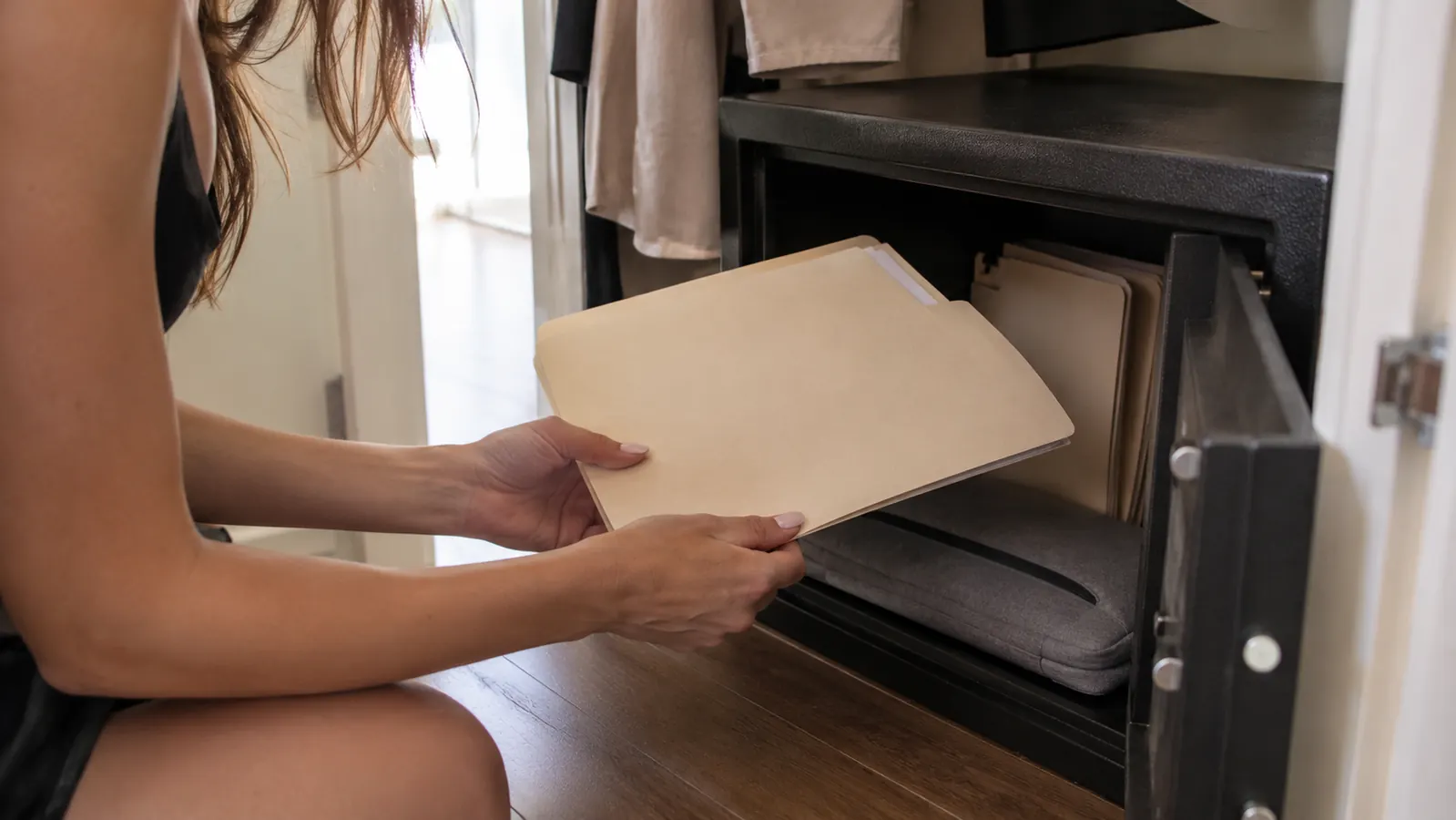
Inside, I keep things in labeled folders: one for the deed and titles, one for passports, one for insurance policies, one for the backup drive wrapped in a padded sleeve. The 1.2 cubic feet sounds small on paper, but it holds all of that with room to spare. I also keep a little emergency cash in a zippered pouch, the kind of thing you want if the banks are closed and you need to pay for a motel room.
What the Fire Rating Actually Means
Here is where I get a little dry, because this is the part that matters and the part most reviews skip. The SentrySafe is rated for one hour of fire protection at up to 1700 degrees Fahrenheit. That is the manufacturer's rating, and it is the number you should compare when you shop. It does not mean the safe is indestructible. It means that in a standard house fire, the interior should stay below the temperature where paper starts to char for about an hour.
Why an hour? Because that is roughly how long it takes a fire department to arrive, set up, and knock down a fire in a typical residential neighborhood. The rating is designed to cover the gap between ignition and suppression. A fire that burns for three hours because nobody is home to call it in can exceed the rating. I have seen that happen. One claim I worked in the East Mountains outside Albuquerque stays with me: the fire started in the garage and burned through the roof before the volunteer department could get there. The safe sat in the hall closet, and when we finally got inside, its outside was scorched black. Inside, the deed and the birth certificates were warm but readable. That was a one-hour safe, and it did exactly what the rating promised. I have also seen the safe that sat in the middle of the burned-out living room, warm to the touch on the outside, with the papers inside perfectly readable. That is the outcome you are buying.
One honest limitation: this safe is not waterproof. If the fire department drowns the room, or a pipe bursts above the closet, water can find its way in. The listing does not claim water protection, and I am not going to pretend it does. If you live in a flood zone or you want the same documents to survive a sprinkler system, you would want a model with a water rating, and you would pay more for it.
The other thing I tell people is that fire ratings are about the contents, not the box. A safe full of papers in labeled folders survives better than a safe full of loose documents, because the folders add a little insulation and keep things from sticking together. That is not in any spec sheet. That is just what I have seen.
I have stood in a burned-out living room and watched a homeowner pull a readable deed out of a warm safe. That is the outcome you are buying.
The Digital Keypad After Thousands of Entries
The digital keypad was the reason I picked this model over a key lock. Keys get lost. Keys get left in the lock. Keys turn up in the pocket of the coat that went to the donation bin. A keypad means I never have to remember where I put a key, and Ray and I each have our own code.
After two years, the keypad still reads entries cleanly on the first try. The buttons have a solid feel and the beep is loud enough to hear from the kitchen, which is a feature I did not expect to care about. The display runs on a 9-volt battery, and the safe warns you when it is getting low. The warning came on a Tuesday morning in early November, right as I was reaching for the passports to renew mine. The display flashed low battery between entries, and I knew I had a few weeks of use left. I bought a fresh 9-volt at the hardware store that afternoon, opened the panel on the inside of the door, and swapped it out before dinner. No locksmith, no drama, no moment where I was locked out. There is also an override key hidden behind a small panel, which is the kind of redundancy that matters if the battery dies at the worst moment.
The one quirk: you have to be deliberate about pressing the buttons. If you tap too fast, the safe sometimes misses a digit and you have to start over. It is a minor annoyance, not a flaw. After the first week I got used to it, and now I enter the code the same way every time without thinking.
I will also say this as someone who has handled a lot of lockout calls: the backup key is stored in a small drawer in my desk, not in the same closet as the safe. If you hide the override key next to the safe, you have defeated the purpose. A burglar who finds the safe will look in the obvious places first.
What Fits and What Does Not
The 1.2 cubic foot interior is roughly the size of a small microwave. The opening measures about 13 inches wide by 10 inches tall, and the interior is deep enough that a stack of manila folders stands upright without the door pressing on them. I measured it the first week because I did not trust the cubic foot number to tell me whether my folders would fit flat. They do, with about two inches of clearance above the tallest stack. Letter-size folders fit flat, which is the detail that matters most to me. My labeled folders slide in and out without bending, and I can see the tabs at a glance. A stack of eight folders, the backup drive, and the cash pouch all fit with room to spare.
What does not fit: anything bulky. A laptop is too big. Jewelry boxes are too big unless you take the jewelry out of the boxes. If you want to store a handgun, this is not the safe for it, and I would not recommend trying to make it work. The interior has a small shelf, which I use for the passports, but it is not a flexible layout. You are buying a document safe, and it is best at being exactly that.
The exterior is a matte finish that does not show fingerprints, which matters in a closet where people are reaching past it for the vacuum. The door opens smoothly and stays where you put it. The locking bolts are on the hinge side and the latch side, which is more than the cheap lockbox it replaced ever had.
The Tradeoffs You Should Know About
No safe is perfect, and the SentrySafe has three tradeoffs that I think you should weigh before you buy. The first is the water issue I already mentioned. Fire protection and water protection are different engineering problems, and this safe solves only the first one. If both matter to you, look for a model that lists both ratings.
The second is that this is a deterrent, not a vault. A determined thief with power tools and time can get into almost anything. What the SentrySafe does well is remove the easy score. The lockbox it replaced could be opened with a pry bar in under a minute. This safe changes the calculation. That is the honest standard: it slows them down, it does not stop them.
The third is the size. If you are the kind of person who wants to store a tablet, a camera, and a stack of external drives alongside your documents, you will outgrow the 1.2 cubic feet quickly. I use it purely for documents and small valuables, and it is the right size for that. If your list is longer, go bigger on the first purchase. Upgrading later means moving everything and re-bolting a new safe to the floor.
What I Liked
- One-hour fire rating at up to 1700 degrees Fahrenheit, with the interior staying cool enough to protect paper
- Digital keypad with room for multiple codes, low-battery warning, and a backup key for emergencies
- Bolts to the floor or a shelf with included hardware, turning it from a carryable box into a real deterrent
- Letter-size folders fit flat, so deeds, titles, and policies stay neat and easy to find
- Solid door with locking bolts on both sides, a clear step up from a basic lockbox
- Simple to use every day, which means you will actually use it instead of hiding it in a corner
Where It Falls Short
- Not waterproof, so it will not protect documents from flooding or a sprinkler system
- 1.2 cubic feet is tight if you want to store a laptop, tablet, or bulky valuables
- Keypad requires deliberate presses, and tapping too fast can make it miss a digit
- Not a burglar vault, so it should be bolted down and treated as a deterrent, not a guarantee
Who This Is For
This safe is for the person who has been meaning to get organized for three years and has a lockbox full of important papers sitting on a closet shelf. It is for the couple that keeps the deed in a filing cabinet and the passports in a drawer and the car titles somewhere in the desk, and wants one place where all of it survives a bad afternoon. It is for the homeowner who has thought about what they would grab in a fire and realized the answer is nothing, because it is all scattered.
It is also for the person who wants to use the safe every week, not just in an emergency. The keypad makes that practical. I keep the backup drive in there, so backing up the family photos means walking to the closet, punching in the code, and swapping the drive. If that took a key and a struggle, I would do it half as often.
Who Should Skip It
Skip it if you need water protection. If you live in a flood plain, or you want the same documents to survive a burst pipe and a fire department hose, this safe is not the answer. Look for a model that lists both a fire rating and a water rating, and expect to pay more for it.
Skip it if you want to store a laptop, a tablet, or a handgun. The interior is simply not shaped for bulky items. And skip it if you want a safe you can carry to a hotel room or a rental. This one is meant to be bolted down, and that is exactly what you should do with it.
Finally, skip it if you think a safe means your valuables are untouchable. No safe is that, and anyone who tells you otherwise is selling something. The SentrySafe is a very good layer of protection. It is one layer. The rest is up to you: bolt it down, keep the override key somewhere else, and do not tell the world what is in your hall closet.
Give your paperwork the same chance I saw in that burned-out living room
The SentrySafe 1-hour fireproof digital keypad safe has held our deed, titles, and passports for two years. Check today's price on Amazon.
Amazon Check Today's Price on Amazon →