
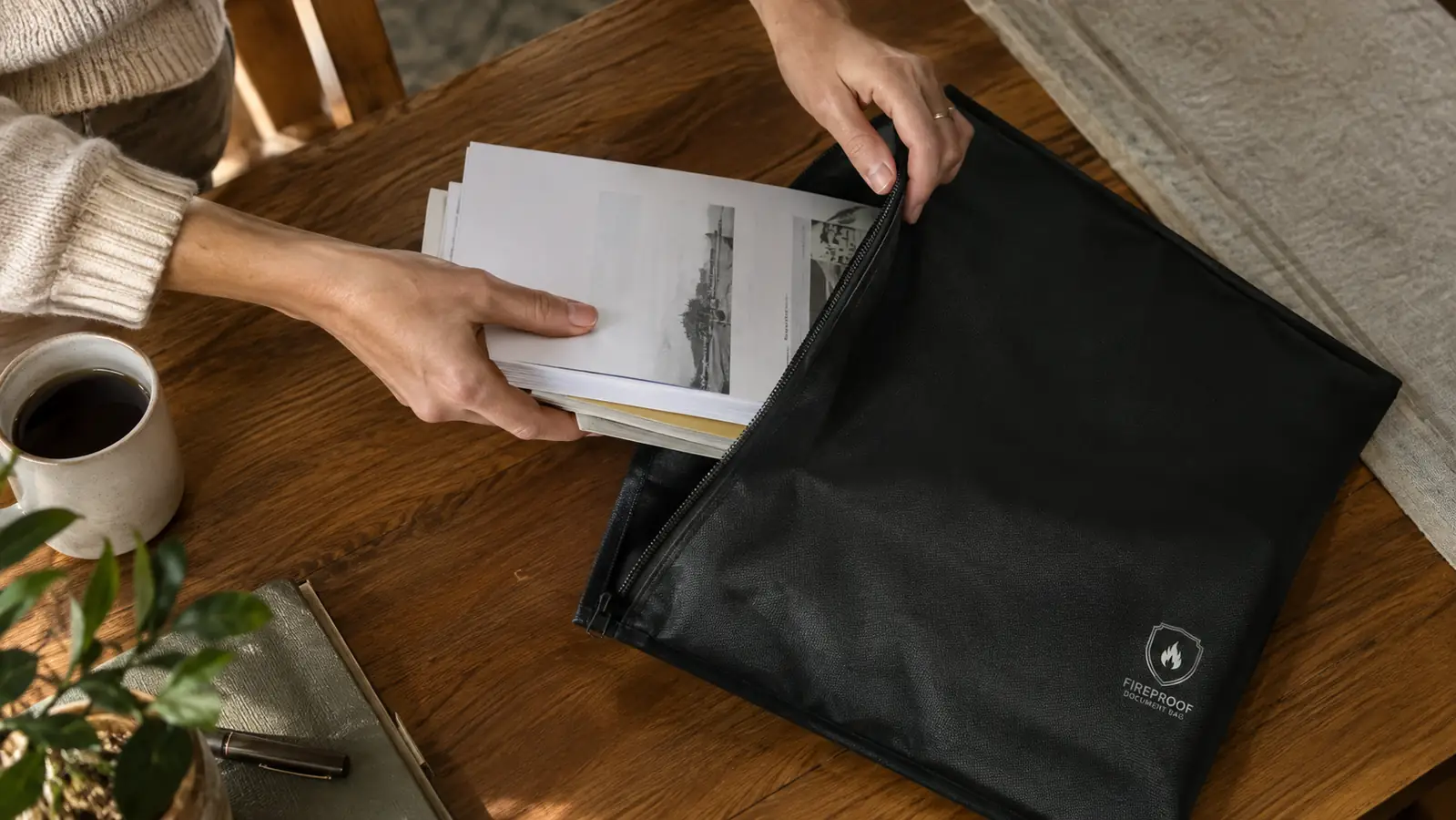
After 25 years as a homeowners-insurance claims adjuster, I can tell you exactly which documents people wish they had grabbed. It is rarely the television or the jewelry. It is the deed they cannot replace without months of fees, the passport they need for a flight next week, the car title that has to be reissued by a state office that is closed for the holiday. I have stood in too many driveways at 7 a.m. while a homeowner stared at a pile of wet ash and tried to remember where the paperwork was. That is why I bought the Andyer fireproof document bag about a year ago. It is a simple two-pocket bag, and it turned the mess in my hall closet into a grab-and-go system my husband Ray and I actually use.
This guide walks through the exact five-step system I set up: what goes in each pocket, what stays in the bigger safe, how to keep copies current, and where the bag lives so it is useful instead of just stored. If you have been meaning to organize your passports and deeds for years, this is the nudge.
Start with a bag that can actually leave the house with you
The Andyer fireproof document bag has two zippered pockets, a carry handle, and enough room for passports, deeds, titles, and a few copies of insurance policies. It is the piece I reach for first when I need to grab paperwork and go.
Amazon Check Today's Price on Amazon →Step 1: Decide what belongs in the bag and what belongs in the safe
Before you sort anything, split your paperwork into two piles. The first pile is grab-and-go: documents you would need immediately if you had to leave the house for days or weeks. That means passports, the house deed, car titles, birth certificates if you have them, and a recent copy of your insurance declarations pages. The second pile is stay-put: things you need occasionally but do not need to carry, like old tax returns, appliance warranties, and the backup drive of family photos. In my house, the stay-put pile lives in the SentrySafe bolted to the floor of the hall closet. The grab-and-go pile lives in the Andyer bag. The bag's 15-by-11-inch interior fits a standard letter-size folder without bending the corners, which matters more than it sounds. In the spring of 2019 I worked a claim in the North Valley where the homeowner kept the deed in a safe deposit box two towns over. The branch flooded the same week her house burned, and she waited nine days for a copy. The deed was the one paper she needed most, and it was the one she could not reach.
The rule I used as an adjuster still holds: if you would be genuinely stuck without it for a month, it belongs in the grab-and-go bag. If you would just be annoyed, it can stay in the safe. Passports and the deed are obvious grab-and-go items. The insurance policy itself is a copy in the bag; the full policy with endorsements stays in the safe.
One thing I tell everyone: do not put your only copies of anything in the bag. The bag is fire-resistant, not a bank vault. It protects against fire and water during an emergency, but it is still a fabric bag that someone could walk off with. The originals of the deed and titles stay in the bolted safe. The bag carries copies plus the passports, which are replaceable through the State Department even if it is a hassle. I learned that rule the hard way in my first two weeks, when the originals rode in the bag until I pictured someone carrying the whole thing out of the closet. They moved back into the SentrySafe that same afternoon.
Step 2: Use the two pockets the way they are designed to be used
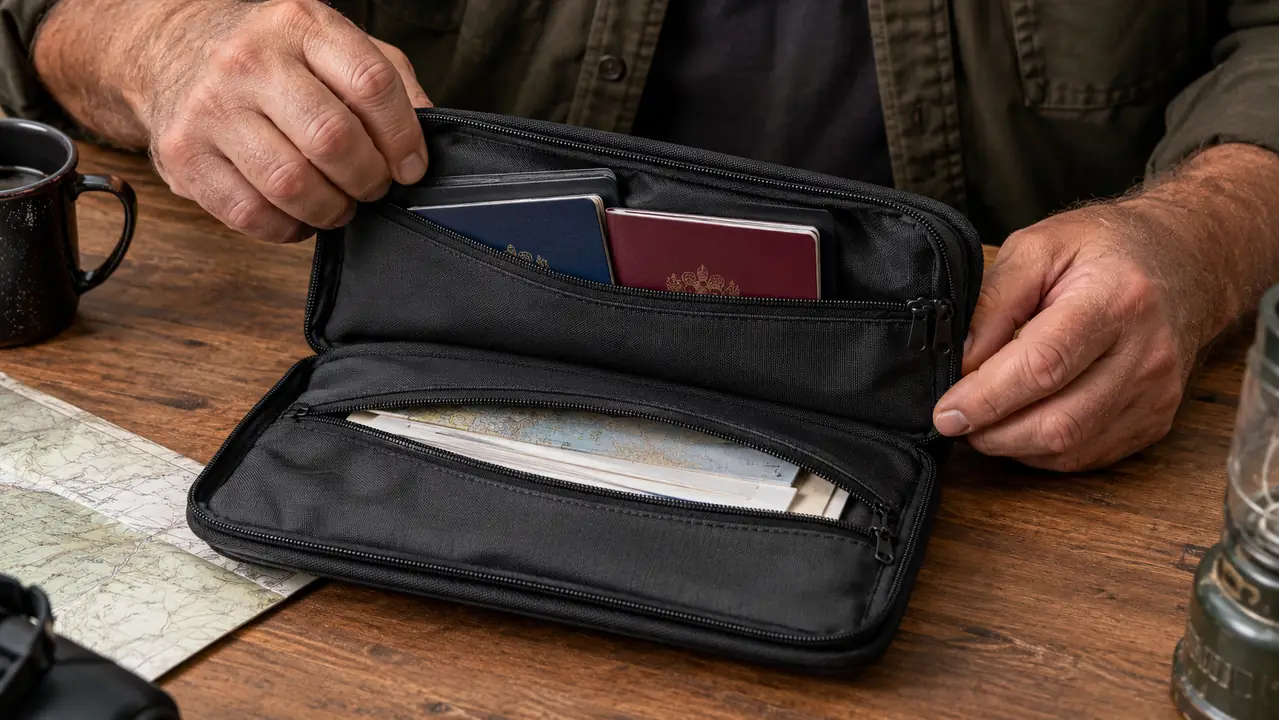
The Andyer bag has two zippered pockets, and the split that worked for me is: front pocket for flat documents, back pocket for booklets and small items. The front pocket holds the folded copies of the deed, car titles, and insurance declarations pages, each in its own clear sheet protector so they do not stick together. The back pocket holds the passports, a few spare passport photos, and the small envelope of emergency cash. I tested that split on the kitchen table the day the bag arrived, using the real documents instead of scratch paper. The front pocket is deep enough for a folded deed and three car titles stacked flat, and the back pocket holds two passports side by side with room left for the envelope. That ten-minute test saved me from reorganizing the whole thing a month later.
I learned this the hard way in my first month with the bag. I tossed everything into one pocket, and every time I needed the passports I had to pull out a dozen sheets of paper to find them. The breaking point came on a Tuesday in March when I needed Ray's passport for a renewal appointment and spent eleven minutes emptying the front pocket onto the kitchen table. Three of those minutes went to papers that had no business being in the bag at all. I threw the stray statements away that night and bought a pack of sheet protectors the next day. Now the system is: if it is a booklet, it goes in the back pocket. If it is a sheet of paper, it goes in the front pocket. Ray can find the passports in the dark now, which is exactly what you want when the smoke alarm is going off.
The Andyer bag's two pockets also make it easy to keep a current copy separate from the archive copy. I keep the current declarations page in the front pocket and a six-month-old copy in the back pocket behind the passports. That way I never have to wonder which version is in the bag.
Step 3: Label the bag and give everything a home inside it
A document bag only helps if everyone in the house knows what it is and where it lives. I put a simple label on the outside of the Andyer bag that says "GRAB AND GO, DO NOT HIDE" in permanent marker. That label is what separates this from the old lockbox era in our house, when important papers were technically somewhere in the closet but nobody could say exactly where.
Inside the bag, I use colored folders: one red folder for the deed and titles, one blue folder for insurance policies, and one plain envelope for the cash. The clear sheet protectors I mentioned in Step 2 keep the copies from curling at the edges. The whole thing takes about fifteen minutes to set up and saves you from digging through a pile of paper at the worst possible moment.
The label matters more than you think. When I was adjusting claims, the families who recovered fastest were the ones who did not have to search. They walked out with the bag, and everything they needed for the next month was in it. A label turns a bag of documents into a system.
Step 4: Pair the bag with a bolted safe, not instead of one
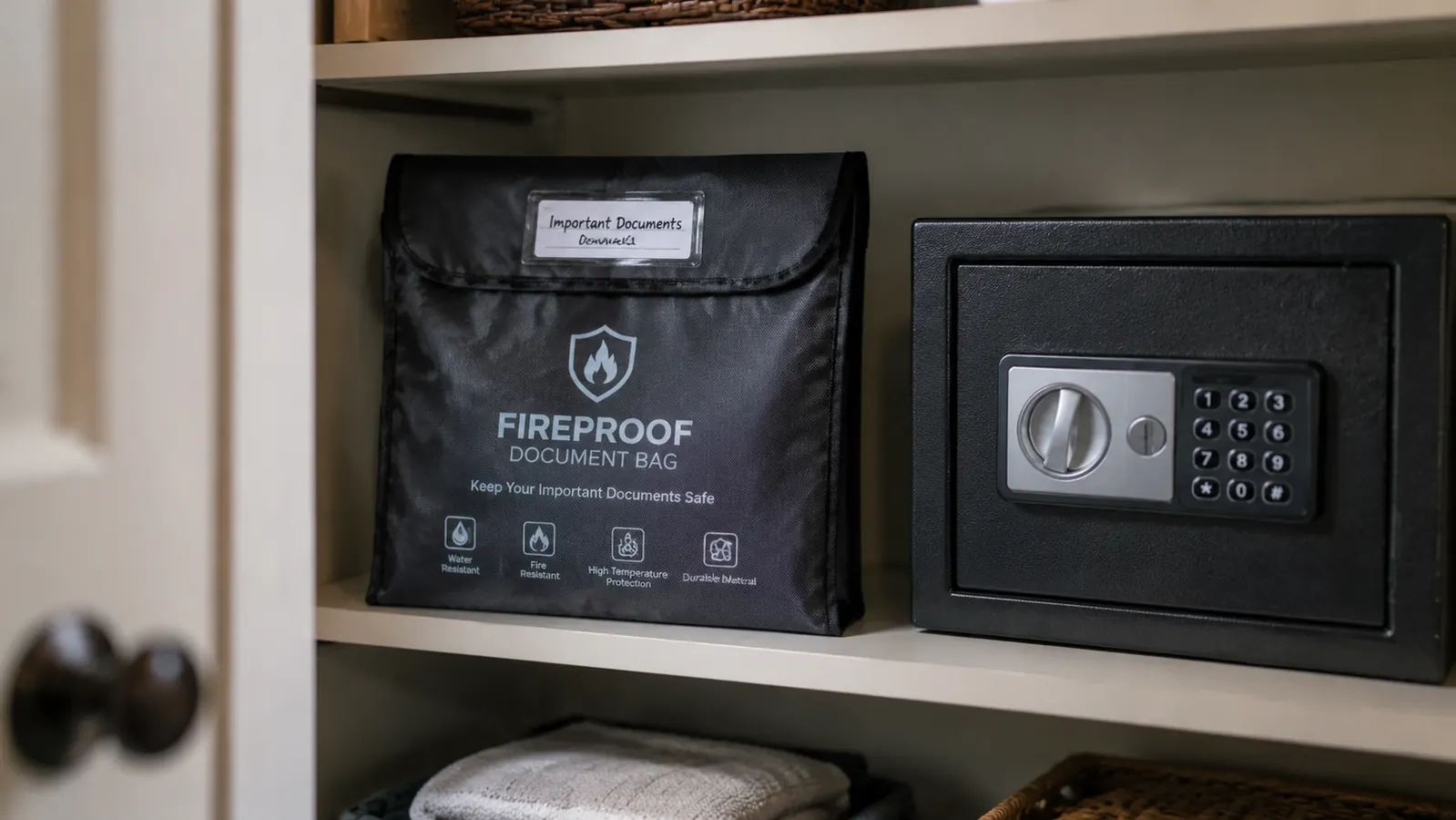
Here is the honest tradeoff. The Andyer bag is the best tool I have found for grabbing documents and leaving the house, but it is not a replacement for a safe. A fireproof bag delays fire and resists water, but it does not stop a determined person from carrying it away. That is why the originals of the deed and titles live in the SentrySafe in the hall closet, bolted to the floor, and the Andyer bag holds the working copies and the passports.
Think of the two as a team. The safe is the archive: originals, backup drives, things you need to keep for years. The bag is the field kit: what you need this week, this month, or during an evacuation. When I recommend a setup to friends in Albuquerque, I tell them to buy the safe first if they have nothing, then add the Andyer bag as the grab-and-go layer. Last fall Ray and I ran a practice drill to see how fast we could actually leave. I opened the hall closet, grabbed the Andyer bag off the shelf above the safe, and had the front door open in forty-five seconds. The safe stayed where it was, bolted to the floor, because that is the point of the pair: the bag leaves, the safe stays.
I also keep the bag on the shelf right beside the closet safe, not in a drawer somewhere else. That way the routine is one motion: open the closet, grab the bag, go. If the bag is in a different room, you will waste time looking for it when minutes matter. Our hall closet is narrow, barely three feet wide, so the shelf beside the safe is not a hard spot to find. The label on the bag faces out, which means even a guest could locate it if Ray and I were not home. That is the standard I hold the whole system to.
Step 5: Set a twice-a-year refresh date and stick to it
A document bag is only as good as the last time you updated it. I pick two dates a year, the first weekend of June and the first weekend of December, and I spend twenty minutes refreshing the bag. That means replacing the insurance declarations page with the current one, checking that the passports have not expired, and swapping out the emergency cash if any bills look worn. I set both reminders in my phone at the start of each year so I never have to remember. The June refresh runs about fifteen minutes because only the declarations page and the cash change. The December one runs closer to half an hour because I also check passport expirations and swap the backup drive that lives in the safe.
The December refresh is also when I check the expiration dates on the passports. If a passport is within a year of expiring, I put a sticky note on the kitchen calendar to renew it. That little habit has saved us twice already, once when Ray's passport was about to lapse before a trip to see our daughter in Denver. The first time was the December after we bought the bag. Ray's passport had eleven months left, and our daughter in Denver had just set a date for her June wedding. He renewed it in January, and the new passport arrived with months to spare. The second time was my own passport, caught during a summer refresh with nine months left, and renewed before it became a problem.
Put the refresh dates in your phone with a reminder. The bag does not update itself. In my claims days, the most common paperwork failure was not that people lacked documents, it was that the documents they had were outdated. A twice-a-year refresh fixes that for good.
What Else Helps
Beyond the Andyer bag itself, a few small additions made the system work better for us. Clear sheet protectors keep copies flat and readable. A small envelope for cash means you are not fumbling for bills in the dark. A portable phone charger in the same closet gives you a way to call for help if the power is out. And a list of emergency contacts, printed on paper, sits in the front pocket of the bag because phones die and numbers get forgotten.
I also recommend scanning your most important documents once a year and keeping the scans on the backup drive that stays in the bolted safe. The scan is not a legal replacement for the original deed, but it gives you a head start when you need to prove what you owned. Photograph the front and back of every passport page and every title, save them as PDFs, and update the folder on the same twice-a-year schedule.
The families who recovered fastest were not the ones with the most expensive safe. They were the ones who could grab one bag and walk out the door.
Give your paperwork a home it can leave with
The Andyer fireproof document bag with two pockets is the grab-and-go layer I use alongside the bolted safe. It holds passports, deed copies, titles, and insurance papers in one labeled, carryable place.
Amazon Check Today's Price on Amazon →