
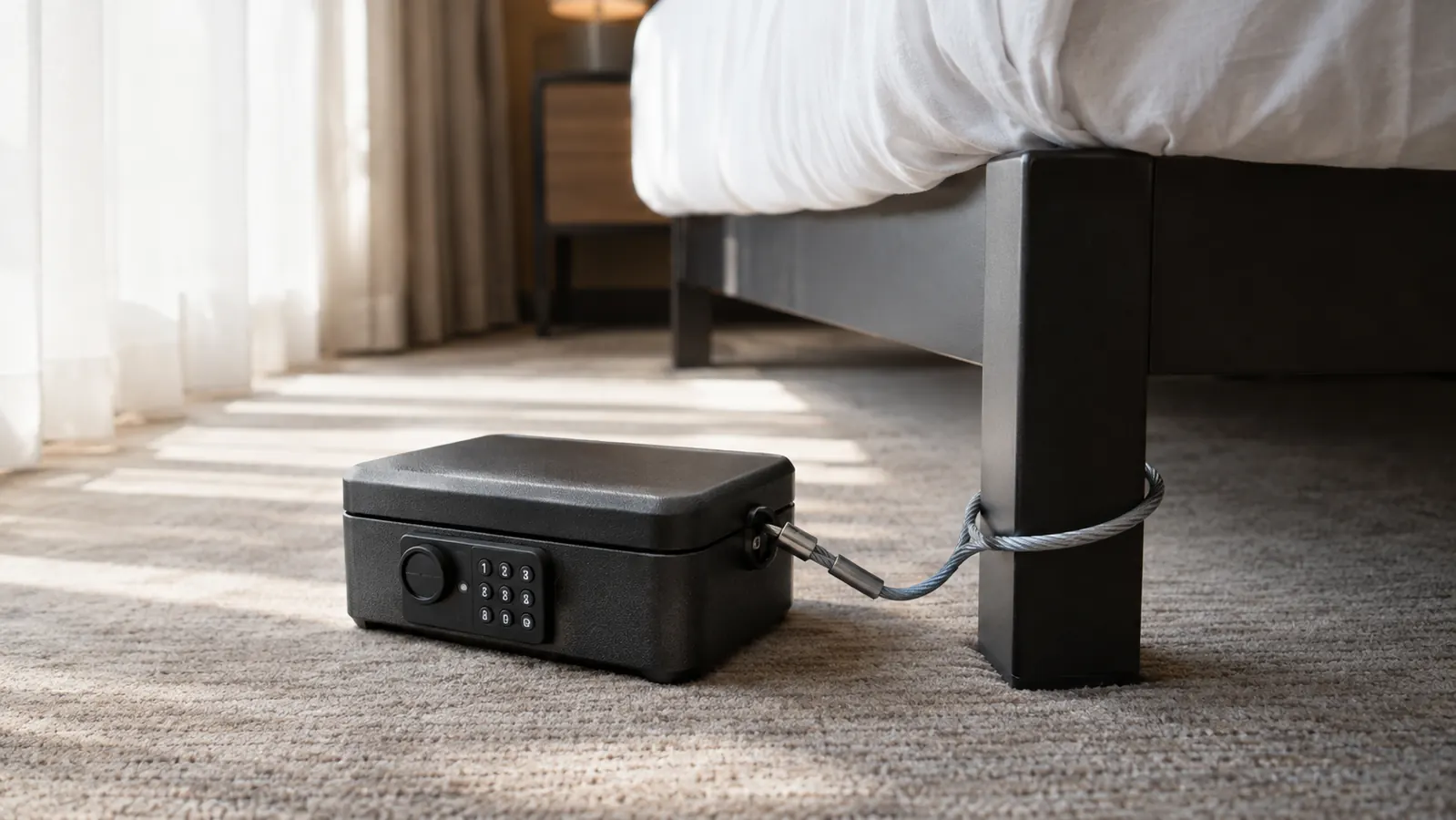
After 25 years as a homeowners-insurance claims adjuster, I have walked through more ransacked bedrooms than I care to count. The first thing burglars check in a hotel room is the obvious stuff: the nightstand drawer, the closet shelf, the suitcase on the luggage rack. The second thing they check is the bathroom, because that is where people hide things they think are clever. A portable safe with a cable does not make you invincible. It makes you a harder target than the person in the next room, and most of the time, that is enough.
I bought the Master Lock Travel Safe about four months ago, mostly for road trips and hotel stays. Since then it has been to a family wedding in Santa Fe, a week at my daughter's apartment in Denver, and a handful of overnight drives where I did not want to leave my passport and my mother's jewelry in a suitcase. It has also spent plenty of time sitting on the floor of my closet at home, doing duty as a second lockbox. Here is the honest long-term picture.
The Quick Verdict
For the money, it is the best lightweight way I have found to keep passports, cash, and small valuables from walking off in a hotel room. It will not survive a determined thief with bolt cutters, and it is not a fire safe. Buy it for what it is: a deterrent that travels well.
Amazon Check Today's Price →Stop leaving your passport in the nightstand
The Master Lock Travel Safe cables to a bed frame or car seat in under a minute. It is the same routine I use on every trip now, and it takes less time than repacking your suitcase.
Amazon Check Today's Price on Amazon →How I've Used It
The first trip was a three-night stay in Santa Fe for a family wedding. I cabled the Master Lock Travel Safe to the metal frame of the hotel bed, tucked it partway under the bed so it was out of sight but still reachable, and put my passport, a wad of emergency cash, and my mother's gold bracelet inside. Every morning I spun the three combination dials, and every evening I set them again. It took about ten seconds each way. That first night I checked the cable three times before I fell asleep, and by the third night I stopped checking entirely.
Since then, the routine has not changed much. In Denver, I looped the cable around the leg of my daughter's guest bed frame and locked my backup hard drive inside while I was at a conference all day. On the drives, I wrapped it around the metal bracket under the passenger seat, which took longer to figure out than the bed frame because the bracket sits at an angle. At home, it sits in the hall closet next to the Andyer document bag, holding copies of our IDs and a spare set of house keys. The Master Lock has become the thing I grab when I need to keep something small out of sight for a few hours or a few days.
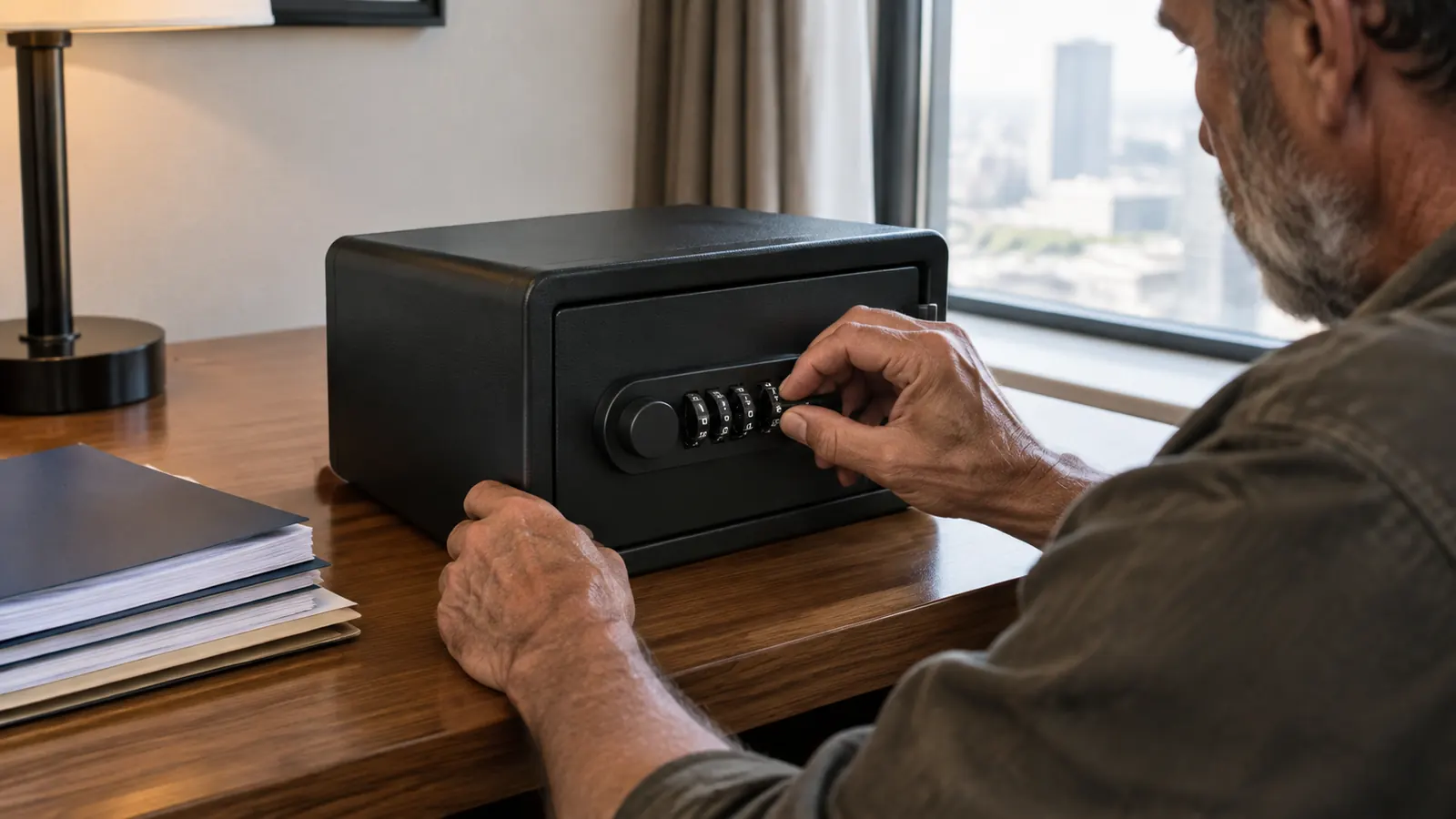
One note on setup: the combination dials are numbered 0 through 9, and you set a three-digit code by turning each dial to your number. There is no reset button, no key override, no battery. That simplicity is the whole point. There is nothing to fail, nothing to recharge, and nothing for a hotel housekeeper to guess if you leave it on the default 0-0-0. The first thing I did was change it to a code I do not use for anything else, and I made sure the dials were not left on the code when I closed the lid.
What the Cable Actually Does (and Does Not Do)
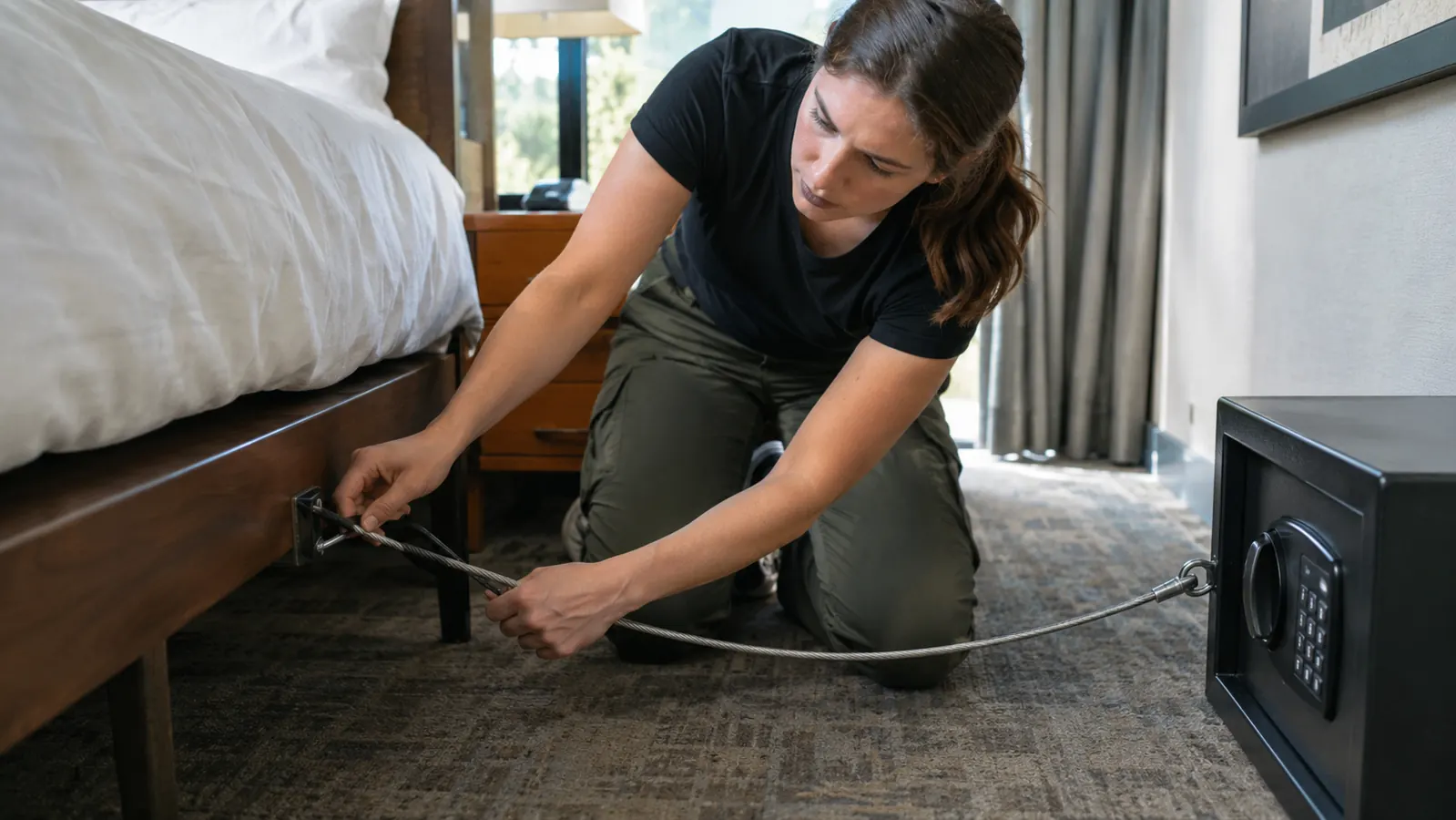
Let me be precise, because I spent 25 years reading police reports and insurance forms. The woven steel cable on the Master Lock Travel Safe is about 3 feet long and it is meant to anchor the box to something heavy: a bed frame, a bathroom pipe, a seat bracket. It stops the grab-and-dash theft, the kind where someone walks off with your whole bag in the thirty seconds you are in the shower.
It does not stop a determined person with bolt cutters, and it does not stop someone who is willing to spend a few minutes working on the box itself. The body is a molded shell, not a steel vault. I tell people the same thing I told policyholders for years: a safe like this is a delay tactic. It buys you time and it makes your things less convenient to steal than the next person's things. That is a real benefit, but it is not a guarantee.
What surprised me is how much the cable changes the math in a hotel room. A thief walking through a room looks for targets they can grab in one motion. A box bolted to a bed frame with a cable is not a one-motion target. In the risk assessment I used to do on claims, that alone moves you from the probable column to the unlikely column. I have also learned to run the cable through the frame twice when the loop is long enough, because that makes it harder to slide the box off the end of the cable.
The Combination Lock Under Real Use
The three-dial combination lock is the part I was most skeptical about. I have seen too many cheap combination locks where the dials stick, or where you have to jiggle them just right to get the code to line up. The Master Lock has not done that. The dials click into place cleanly, and after four months of daily use, they still turn with the same resistance as day one. Ray tried it once in the kitchen and got the code open on his second try, which tells me the dials are forgiving enough for someone who does not use them every day.
The tradeoff is that three dials with ten numbers each gives you 1,000 possible combinations. That is plenty to keep out a curious housekeeper or a casual thief, but it is not high security. Someone with time and a reason to get in could work through combinations, and someone who watches you set the code knows it instantly. I set mine away from prying eyes, and I do not let the dials stay on the code when the box is open. In a hotel room that means turning the dials to a random position before I close the lid, which takes two seconds.
There is no key backup, which I actually consider a point in its favor. Keys get lost. Keys get copied. A combination you keep in your head cannot be lifted from your pocket. The downside is that if you forget the code, you are out of luck, so I keep the code written in a place that is not with the safe and not in my phone contacts under anything obvious. I also told my daughter the code before the Denver trip, in case something happened to me, and she got it open on her first try.
How It Holds Up on the Road
I have dropped this box on hotel room floors, slid it across the trunk of the car, and once left it wedged between my suitcase and the seat back for a six-hour drive from Albuquerque to Denver. The shell has a few scuffs now, which I expected, but the cable anchor points are still tight and the latch still seats squarely. Nothing has loosened, nothing has rattled, and the interior is still clean. I checked the hinge after the Denver trip because that is the first thing to go on a cheap box, and it has no play at all.
The interior is lined with a soft foam that keeps the contents from sliding around. That matters more than you would think when you are carrying jewelry or a backup drive. My mother's bracelet came through the Denver trip with no new scratches, and my backup hard drive has ridden in this box on every drive since I bought it. The foam also keeps the contents quiet, which I noticed on the first drive when I realized I could not hear the cash shifting around in the trunk.
Size is the one thing I would warn people about. This is a small travel safe, and small means small. It fits a passport, a phone, a wallet, a small jewelry pouch, and not much else. If you are hoping to lock down a tablet or a camera body, you need the next size up. I use it for the things I cannot replace, not the things I would simply be annoyed to lose. On the Santa Fe trip I had to leave my Kindle in the suitcase because the safe was already full, and that was the right trade.
Where I Still Would Not Trust It
I want to be direct about the limits, because this is the part that matters if you are deciding whether to buy one. The Master Lock Travel Safe is not a fire safe. If the hotel room catches fire, the contents will not survive. It is not a theft-proof vault. A crowbar, a hammer, or a few minutes with the right tool will open it. And it is not a substitute for the SentrySafe bolted to the floor of my hall closet at home. Those are three different jobs, and this box only does one of them.
What it is, is a portable deterrent that raises the effort required to steal your things. For hotel rooms, for car trips, for the gym locker where you do not want to leave your wallet in a bag, that is a genuinely useful job. I would not leave it in a parked car overnight with the cable visible, because a visible cable advertises that there is something worth protecting. I tuck it under the seat or cover it with a jacket. I also would not use it as the only protection for something irreplaceable in a place where a thief has hours to work on it.
What I Liked
- Three-dial combination lock has nothing to fail, recharge, or reset, and it still turns cleanly after months of daily use
- Woven steel cable anchors to a bed frame or car seat bracket in under a minute
- Foam-lined interior keeps jewelry and backup drives scratch-free and quiet
- Light enough and small enough to travel in a carry-on or tuck under a car seat
- No installation, no batteries, no key to lose, and it costs a fraction of a real safe
Where It Falls Short
- Molded shell is not fire-rated, so the contents will not survive a fire
- A determined thief with bolt cutters or a few minutes of work can open it
- Interior is small: a passport, phone, wallet, and a small jewelry pouch, and not much else
- Only 1,000 possible combinations, so it is a deterrent, not high security
- No key backup, so a forgotten code means you are locked out for good
After 25 years of walking through ransacked bedrooms, I can tell you the truth: a cabled safe does not make you invincible. It makes you the harder target, and that is usually enough.
Who This Is For
Buy the Master Lock Travel Safe if you travel with things you cannot replace: a passport, a second ID, jewelry you actually wear, a backup drive with family photos. Buy it if you stay in hotels or Airbnbs where the room is cleaned by someone you do not know, or if you drive long distances and want to leave the car for a meal without taking everything with you. Buy it if you want a second lockbox at home that costs a fraction of what a real safe costs and does not need to be bolted down.
It is also a reasonable first safe for a teenager heading to college, or for anyone who rents and cannot bolt a safe to the floor. The cable gives you an anchor point on a bed frame or a radiator, and the three-dial lock is simple enough that you will actually use it. A safe you use every day is worth more than a vault you cannot be bothered to open. For my own use, it has earned a permanent spot in the car for the drives between Albuquerque and Denver.
Who Should Skip It
Skip it if you need to protect documents from a fire, because this box will not do that. Skip it if you are looking for a permanent home safe, because the molded shell and cable are not in the same league as a bolted steel safe. Skip it if you want to lock down a laptop or a tablet, because the interior is simply too small. And skip it if you are under the impression that any portable safe stops a determined thief. It delays. It deters. It does not defeat.
If your real need is fire protection for the deed and the titles, spend the money on a fire-rated safe like the SentrySafe I keep bolted in the hall closet. If your real need is stopping a professional burglar, spend the money on a heavier safe that is anchored to the structure of the house. The Master Lock Travel Safe is the right tool for travel, not for every job. I have one, I use it constantly, and I still would not tell you it is the only safe you need.
The same safe I've cabled to bed frames for four months
If you travel with a passport, jewelry, or a backup drive, this is the cheapest peace of mind I have found. Cable it to the bed frame, set a code, and stop worrying about the nightstand drawer.
Amazon Check Today's Price on Amazon →