After 25 years as a homeowners-insurance claims adjuster, I can tell you exactly where valuables disappear on a trip. It is rarely the dramatic hotel-room burglary you picture. It is the passport left in the rental car while you run in for coffee. It is the wallet in the beach bag while you swim. It is the laptop sitting on the hotel bed while housekeeping is in the room. The common thread is not bad locks. It is that the valuables were sitting out in plain sight, unsecured, waiting for one moment of inattention. That is why I bought the Master Lock small travel safe with cable about four months ago, and why it now goes on every road trip and hotel stay.
A travel safe is not a bank vault. It will not stop a determined thief with bolt cutters and an hour of quiet time. What it does is change the math: it turns a two-second grab into a noisy, visible, time-consuming project. In my years of reading police reports, that alone sent most thieves looking for an easier target. Here is the routine I use, step by step, so you can do the same without overthinking it.
The safe that rides along on every trip I take
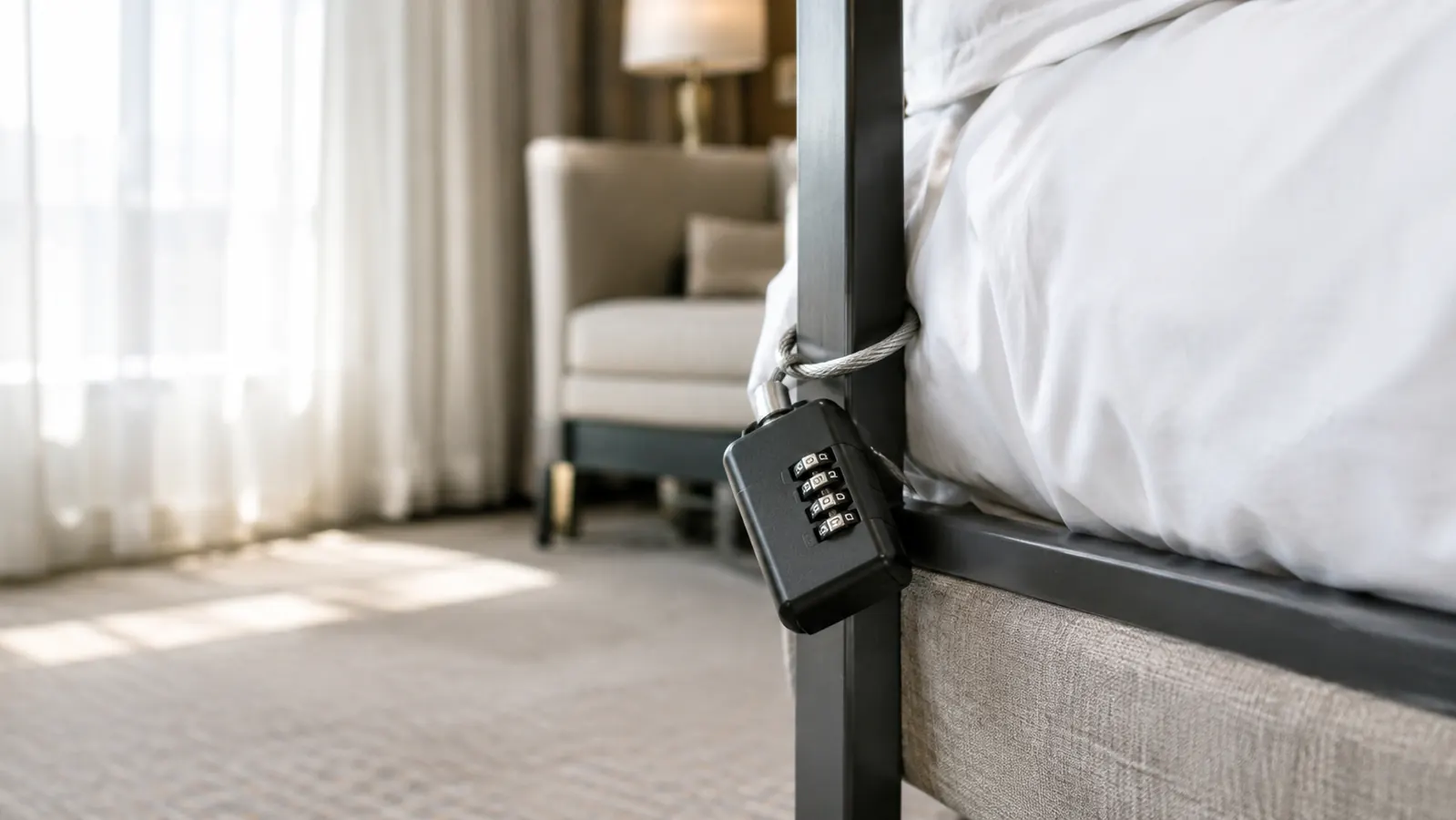
The Master Lock small travel safe with cable is the one I keep cabled to a seat frame in the car or a hotel bed frame. It holds passports, cash, jewelry and a backup drive, and the combination dial means no batteries to die at the worst moment.
Amazon Check Today's Price on Amazon →Step 1: Decide what actually travels with you
Before you pack anything, sort your valuables into three piles. The first pile is what stays home: the house deed, car titles, birth certificates, and anything else you can live without for a week. The second pile is what stays on your body: the credit card you are using that day, your phone, and a small amount of cash. The third pile is what goes in the travel safe: the passport you are not using right now, the second card, the backup cash, jewelry you do not want to wear at the beach, and a photocopy or photo of every document in your wallet.
This sorting step matters more than the safe itself. Every claims file I ever opened had the same shape: the traveler carried too much, kept it all in one bag, and lost everything at once. One claim I will never forget came from a family of four who flew to Orlando in March of 2019. The mother had packed every important document they owned: birth certificates, the deed to the house, her grandmother's pearl necklace, all of it in one carry-on. The bag was grabbed from the rental car while they were checking in at the hotel. It took them months to replace the documents, and the necklace never surfaced. That is the reason I sort into three piles before I pack. The deed stays home. The necklace, if it travels at all, goes in the safe. A travel safe works best when it holds only what you cannot replace easily. If you are tempted to put your whole wallet in it, stop and take out the one card you actually need that day.
I also keep a small index card inside the safe with the phone numbers for canceling cards and the number for the U.S. Embassy or your home country's consulate. You will not remember those numbers when your wallet is gone and your phone is dead. Write them down before you leave.
Step 2: Set the combination before you leave the house
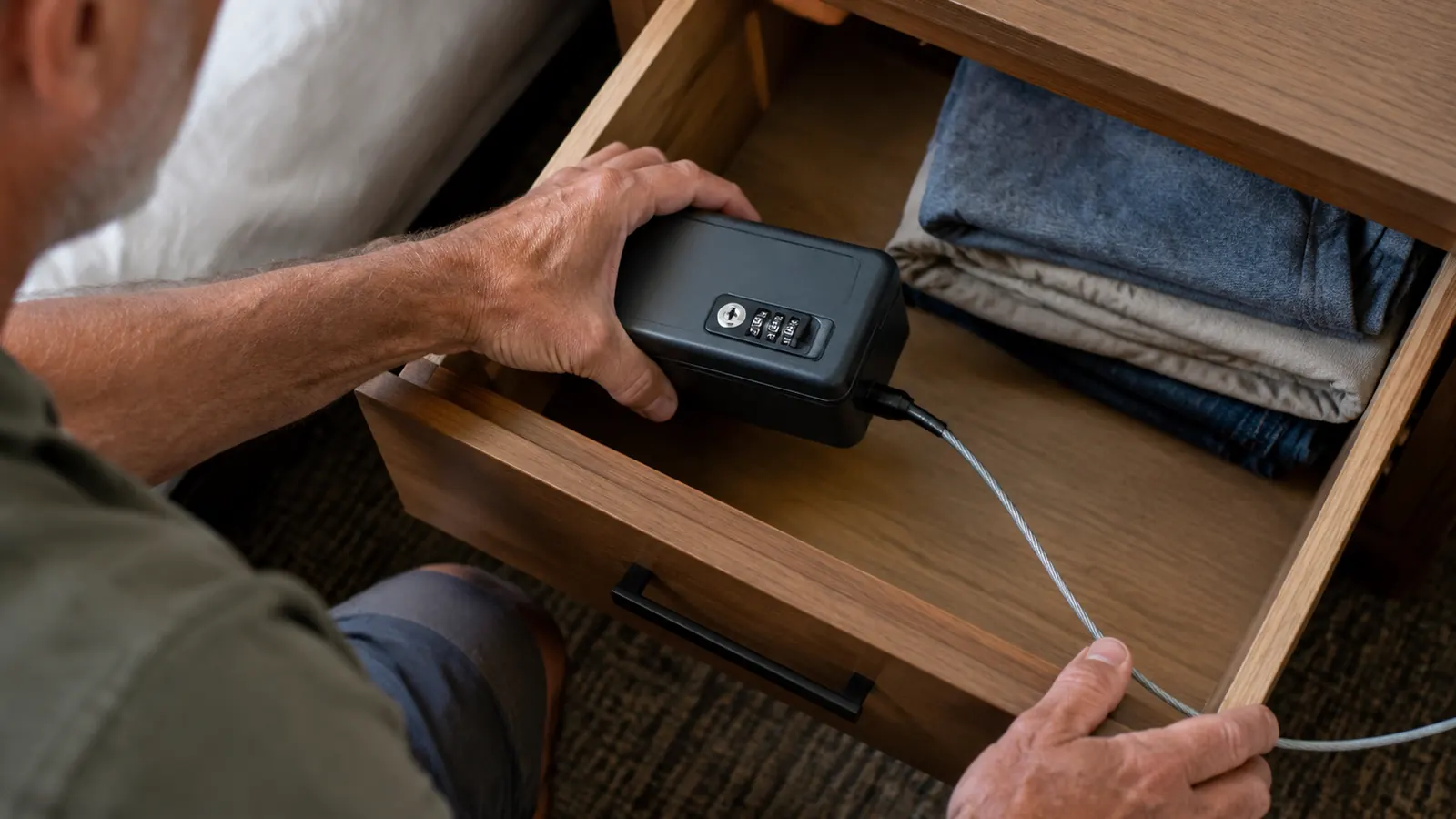
The Master Lock 5900D uses a three-digit combination dial, not a keypad. That is a feature, not a limitation. There are no batteries to check, no electronics to fail in airport security, and no little key to lose in a rental car. But you need to set the combination at home, in daylight, when you are not tired and not in a hurry.
Read the instructions that come with the safe and set a combination you can recall under stress. Avoid your birthday, your anniversary, or anything a family member could guess. I use a number tied to an old address, one I have typed so many times that my fingers remember it even when my brain does not.
Then do a dry run. Lock the safe, hand it to your spouse or travel partner, and see if you can open it in under 30 seconds. I timed myself with my phone the first time I set ours, and it took me eleven seconds once I had the number in my fingers. If you fumble with the dial, practice a few more times. The one thing you do not want is to be standing in a hotel lobby at midnight, tired, with the safe locked and your passport inside it.
Step 3: Cable it to something that does not move
The cable is the whole point of a travel safe. A locked box that can be picked up and carried away is just a gift box with a combination. The Master Lock comes with a steel cable that loops through the locking mechanism and around something solid. In a hotel, that means the frame of the bed, the bracket of the closet safe if there is one, or the pipes under the bathroom sink if the bed frame is too flimsy. On our first trip with the safe, a long weekend in Santa Fe last October, I tried to cable it to the bed frame in our hotel room and found the frame was a hollow metal rail that flexed when I pulled on it. The cable would have slid right off. I ended up running it around the base of the toilet in the bathroom instead, which sounds odd but worked perfectly. Now I check the bed frame before I commit to it. If it moves, bends, or has gaps big enough for the cable to slip through, I find something else.
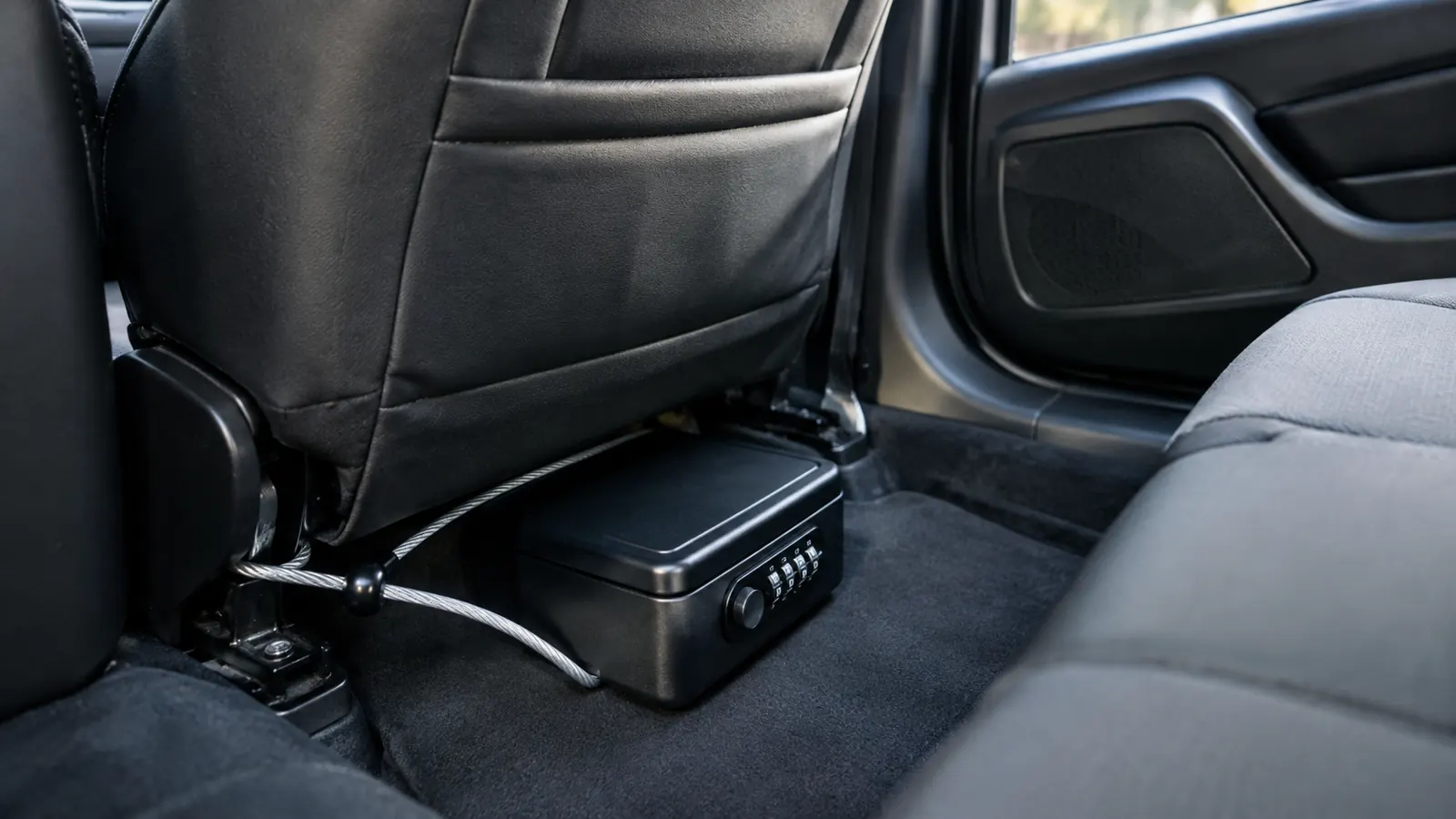
In the car, I loop the cable around the metal frame under the driver's seat or the seat track of the passenger seat. Tuck the safe out of sight, under the seat or in the trunk if you can route the cable through the seat back. Out of sight matters more than you think. A thief walking a parking lot is looking through windows for anything visible. A box under the seat is invisible, and an invisible target is not a target.
One warning from my claims days: do not cable it to the luggage rack on the roof or anything else that is bolted on with a few screws. A determined person can unbolt the rack in under a minute. The cable needs to go around something that is welded or otherwise part of the structure, something that would take serious tools and serious noise to remove.
Step 4: Use it the moment you arrive, not after dinner
The most common mistake I saw in claims files was the traveler who planned to use the safe later. They checked in, set the bags down, went to dinner, and came back to find the room had been entered. The passport was gone, along with the cash they had meant to lock up. The safe was still in the suitcase, unused. The worst example I saw was a couple on their anniversary trip to New Orleans in the spring of 2017. They checked into a French Quarter hotel around 3 p.m., put their bags down, and went straight to dinner. When they came back, the room had been entered. The wife's jewelry case was gone from the dresser, and the husband's wallet had been taken from his jacket in the closet. They had a travel safe in their luggage, still in the box from the store. I wrote that claim up myself, and I have never forgotten the look on her face when she told me the safe was unused.
So the rule in our house is simple: the safe gets opened and cabled up before the suitcase is even unzipped. Ray and I take turns: one of us starts the safe routine while the other checks the room, looks under the bed, and confirms the door locks work. It takes about two minutes, and it means the valuables are secured before we have even decided where to have dinner.
If you are staying more than one night, make the safe part of your morning routine too. Before you leave the room for breakfast, lock up the passport and the second card. It takes ten seconds, and it means you never leave the room with your valuables sitting out while housekeeping is working.
Step 5: Keep a copy kit separate from the safe
This is the step I learned the hard way as an adjuster, watching families try to rebuild after a loss. The safe protects the originals, but you also need copies somewhere else. Before I leave on any trip, I photograph both sides of every card, my passport, my driver's license, and my insurance cards, and I email those photos to myself and to Ray. They live in the cloud, not in the safe.
If the safe is stolen or the bag is lost, you still have the numbers, the policy details, and the document photos you need to start canceling and replacing everything. I also keep a paper copy of the same documents in the Andyer fireproof document bag at home, but for travel the emailed photos are what matter. They weigh nothing, they cannot be stolen from your luggage, and they are accessible from any phone. A client in Albuquerque taught me this lesson in a good way. Her house burned in the winter of 2015, and the fireproof safe in her closet survived, but she could not get back inside until the fire marshal cleared the house two days later. What got her through those two days was the folder of photocopies she kept in her glove compartment: insurance policy, IDs, the deed. She had been doing the copy kit for years because her own mother lost everything in a house fire in the 1980s. I recommended the same habit to every policyholder after that.
One more habit from my adjuster years: take a photo of the hotel room number and the safe's serial number when you arrive. If the worst happens and you need to file a police report, you will have the details in your camera roll instead of trying to remember them at 2 a.m.
What Else Helps
A travel safe is one layer, not the whole system. I use three other habits that cost nothing. First, I never leave a laptop or tablet visible in a parked car, even for five minutes. Second, I carry a wallet that fits in a front pocket, so it is never sitting in a back pocket where a pickpocket can reach it. Third, I keep my phone in a zippered pocket or a crossbody bag with the zipper facing my body, not dangling behind me.
I also tell every traveler I know the same thing: do not hide valuables in the hotel room's obvious spots. Under the mattress, in the freezer, in the toilet tank, in a sock drawer. Burglars check those places first, because everyone uses them. The travel safe solves that problem by making the valuables heavy, noisy, and attached to something solid. A thief can find them, but they cannot take them quickly or quietly.
The passport was gone, along with the cash they had meant to lock up. The safe was still in the suitcase, unused.
Make the safe part of your routine before you need it
The Master Lock small travel safe with cable is small enough to pack, sturdy enough to trust, and simple enough that you will actually use it. Set the combination at home, cable it to a seat frame or bed frame, and lock up the valuables the moment you arrive.
Amazon Check Today's Price on Amazon →