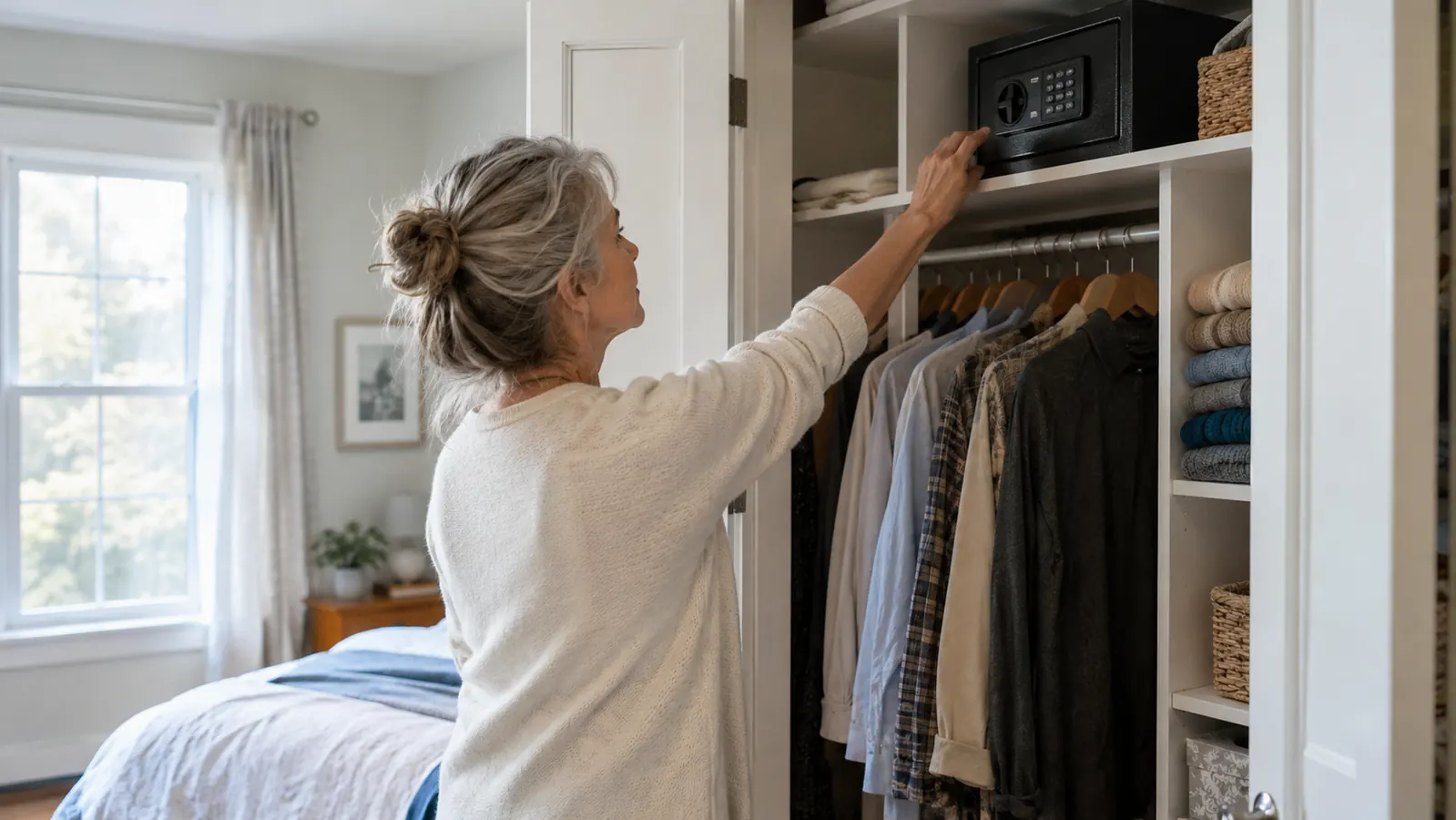
Most of the safes I saw in 25 years as a homeowners-insurance claims adjuster were not broken into. They were left open. People hid a jewelry box in a sock drawer, got tired of fussing with a keypad, and stopped locking the thing. The Grimtron biometric fingerprint safe exists to fix that specific problem. It opens with a fingerprint in a couple of seconds, so locking it costs you nothing. I bought one about eight months ago for my mother's jewelry and the everyday items I reach for often. It sits on a shelf in my bedroom closet, and it gets used every single day. Here is exactly how I set it up, step by step, so it actually stays locked. The whole method comes down to one idea: make the locked position the easy position.
Before you program anything, understand what this safe is for. At 20 pounds, it is not a vault. A determined person could pick it up and carry it out. What it is, is a deterrent with a fast lock: quick for you, slow for everyone else. That makes it right for jewelry and small everyday valuables, and wrong for the deed and passports, which belong in a heavier fireproof safe. I keep my important papers in a keypad safe in the hall closet. The Grimtron handles the stuff I reach for daily. Think of it as the difference between a lockbox and a drawer. The drawer is faster, which is why people use it. The Grimtron has to beat the drawer on speed, or it will lose to the drawer. Set it up with that job in mind and every step below gets easier.
The safe that opens with a fingerprint, not a hunt for keys
The Grimtron biometric safe takes a couple of seconds to open, so locking it again costs you nothing. That is the whole point: fast enough that you will actually use it.
Amazon Check Today's Price on Amazon →Step 1: Choose the spot before you touch the keypad
Location decides everything. A safe in the back of a closet that requires moving boxes to reach will not get used, and an unused safe is just a box. I have walked through enough homes after a loss to know that the safe that gets used is the one that sits where the owner's hands already go. I put mine on a shelf in my bedroom closet, at about chest height, where I can reach it without bending or stretching. That matters more than you think. If opening the safe takes effort, you will start leaving it unlocked, and an unlocked safe might as well be a drawer.
Think about who else needs to reach it. My husband Ray enrolled his fingerprint too, so either of us can grab what we need. If the safe is for both of you, put it somewhere both of you can reach. Chest height for the taller person is fine; just make sure the shorter one can get to it comfortably.
Also think about sight lines. A shelf in a closet is good because it is out of view from the bedroom door and any window. Keep the safe out of direct sight of the street. It will not stop a determined burglar, but there is no reason to advertise what you own. And if your safe has bolt-down holes in the base, do that now, before it is full. A 20-pound safe is easy to move when it is empty, and the anchor points are much easier to reach before you fill it. A closet shelf also keeps the safe out of the way of daily traffic, which means it is less likely to get knocked over or buried under laundry.
Step 2: Install fresh batteries and set the PIN first
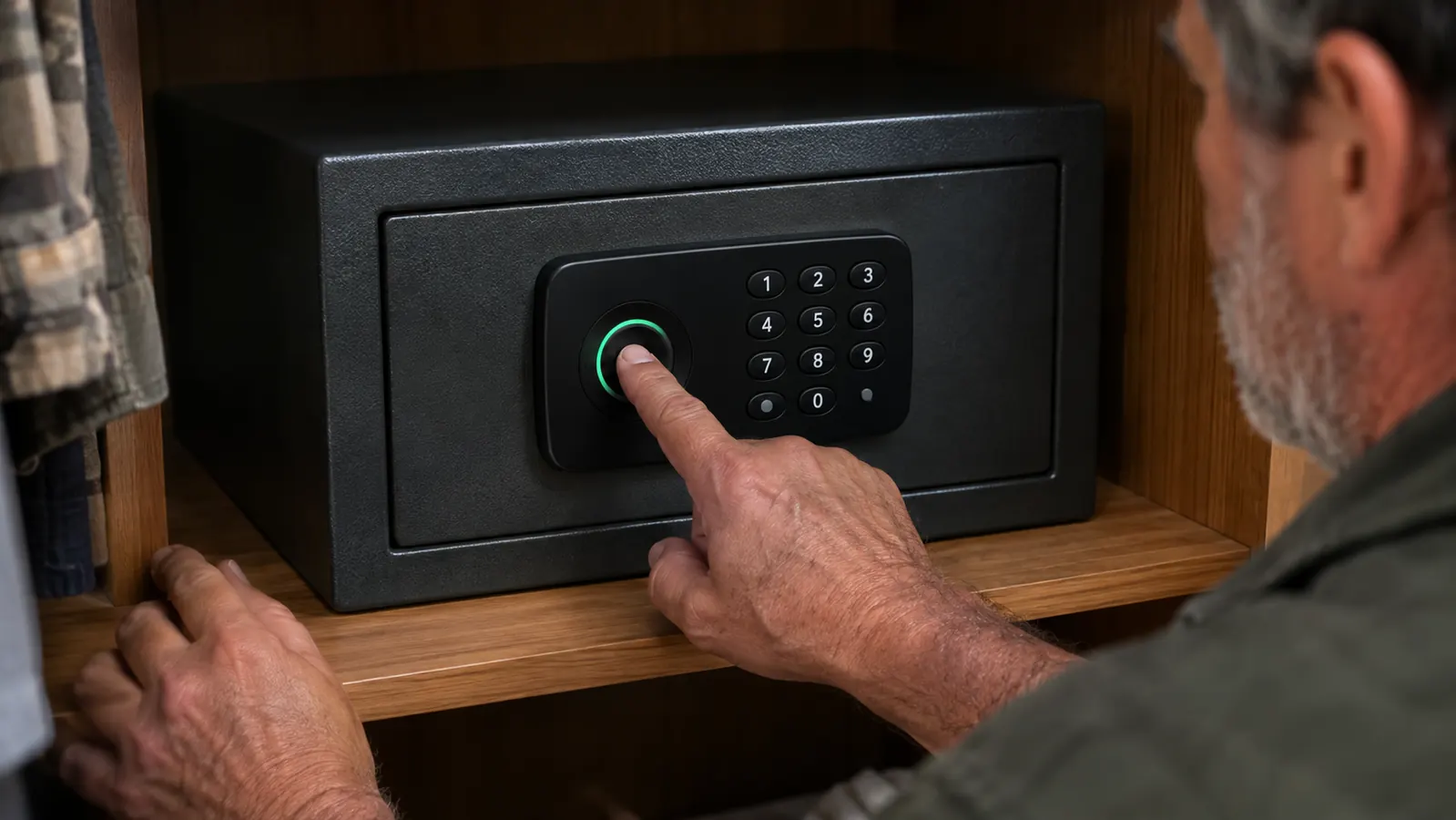
The Grimtron runs on batteries, and the first thing you should do is install fresh ones, even if the box says batteries are included. I have seen too many electronic locks fail at the wrong moment because the owner trusted the batteries that shipped in the box. A fingerprint safe that dies at 2 a.m. is a paperweight, and the PIN is your backup for exactly that moment. Fresh batteries are cheap insurance. Close the battery compartment, power the unit on, and follow the manual's prompt to set a master code.
Set the PIN before you enroll any fingerprints. The lock accepts a 3 to 8 digit code, and I recommend the longest one you can remember. Use 6 to 8 digits, and do not use your birthday, your anniversary, or the last four digits of your Social Security number. Burglars check those first. Pick something you do not use anywhere else, and write it down somewhere safe, not on a sticky note stuck to the safe. And when you write it down, be honest about where you put it. A code stored in your phone contacts under a name only you recognize is fine. A code on a sticky note under the safe is not.
The PIN is your fallback, not your main path. Fingerprints fail when your hands are wet, dusty, or greasy, and gloves make them useless. The PIN is what gets you in on those days. That is why you set it first, and why you should test it before you trust the fingerprint reader.
Step 3: Enroll your fingerprints the right way
This is the step most people rush, and it is the one that determines whether the safe actually opens fast. When the safe prompts you to scan, use the pad of your finger, not the tip, and press firmly but not hard. Lift your finger cleanly between scans and follow the prompt exactly. If the manual says to scan the same finger three times, do all three. Each pass teaches the reader a slightly different angle. It can feel like the safe is judging your finger. It is not. It is comparing your scan to the samples it stored, and more samples mean a better match.
Enroll more than one finger. I registered my right index finger, my right thumb, and my left index finger. The reason is practical: if I am holding something in my right hand, I can still open the safe with my left. Ray did the same with his own fingers. A reader that knows only one finger is a reader that fails you at the worst moment. Think of it like this: the fingerprint reader is not there to prove who you are. It is there to let you in fast, and every finger you enroll is one more way to be fast.
Test the angle you will actually use. Stand where you will stand, reach how you will reach, and scan. Most people enroll their fingerprints sitting at a table and then wonder why the reader struggles when they scan standing at the closet shelf. The reader learns your finger, but it helps if you teach it the position you will really use.
Step 4: Test the lock, then build the habit
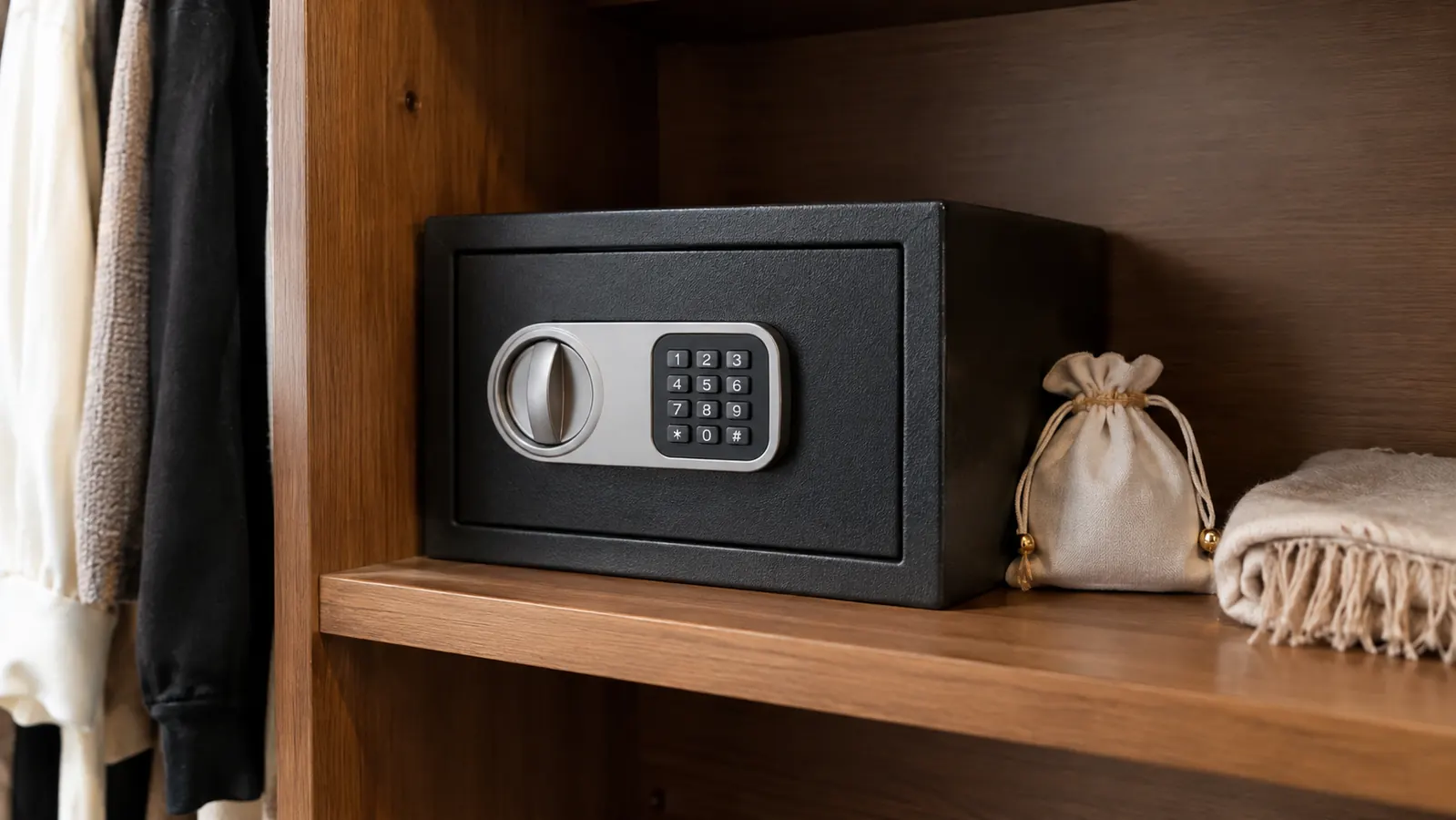
Close the door, wait for the lock to engage, then put your finger on the reader. It should open in a couple of seconds. Then close it again and test the PIN. Then test a finger you did not enroll, just to confirm the reader rejects it. That last test tells you the lock is actually doing its job, and it only takes a minute. Do this before you put anything valuable inside. It is easier to troubleshoot an empty safe.
Now test it the way you will use it in real life. Wet your fingertip slightly and try again. Put on a light pair of gloves and see what happens. You need to know how the safe behaves on a bad day before you need it on a bad day. If the reader struggles with a damp finger, the PIN is your answer, and you already set it in Step 2.
Then build the habit. The whole point of a biometric safe is that locking it costs nothing, so make locking it automatic. Every time you take something out, close the door and let it lock. In my line of work I saw too many people who bought a safe, used it for a week, and then left it open on the dresser. A safe that is open is a tray, not a safe. The habit matters more than the hardware. A mediocre safe that is always locked beats an expensive safe that is always open.
Step 5: Load it so you can grab what you need fast
Now that the lock works, arrange the inside before you fill it. I keep my mother's jewelry in a small fabric pouch so chains do not tangle, and I put the pieces I reach for most on top. I also keep a small amount of emergency cash in a zippered pouch in the same safe, because cash is the one thing you cannot replace with a phone call. If you store a backup drive, put it where it will not slide under everything else. The faster you can grab what you came for, the faster you close the door and lock it.
Do not overload it. A safe stuffed to the lid is harder to close, and a door that does not seat properly can keep the lock from engaging. Leave a little room. If you have more than fits, that is a sign some of it belongs in a bigger safe or a document bag, not a sign to cram it in.
Finally, do one last full test with the safe loaded: close it, lock it, open it with your fingerprint, open it with the PIN, and close it again. Then put it in its spot and leave it alone. If the safe is for your spouse too, have them do the same test. Two people who can open it without thinking is the whole point. From here on, the routine is simple: reach, scan, grab, close, lock. That routine is the entire point of this safe, and it takes about five seconds.
What Else Helps
Two small things make a fingerprint safe dramatically easier to live with. First, a low light near the safe. The reader needs to see your finger, and a dark closet at night is where the reader fails. A small battery light on the shelf is cheap and saves you from fumbling in the dark. Second, keep a list of what is inside, somewhere other than inside the safe. After a break-in or a fire, you will not remember everything you owned. I keep a handwritten list in my document bag with the copies of our IDs and policies. It takes two minutes to write, and it is the most useful piece of paperwork after a loss. A third thing, if you travel: a small cable safe is a different tool for a different job. The fingerprint safe stays home, where it belongs.
If your safe came with an override key, store it outside the safe, not inside. The point of a backup is that it exists when the lock does not cooperate. Keep it somewhere separate from the safe itself, and tell someone you trust where it is.
A safe does not have to be impenetrable. It has to be faster to use than the alternative, or it will sit open.
That is the whole setup. Thirty minutes of work, and from then on the Grimtron is faster than the sock drawer it replaced. Eight months in, mine still opens on the first try almost every time, and when it does not, the PIN gets me in. That is the test that matters: not whether the lock is clever, but whether you will actually use it.
Set it up this weekend and stop hunting for your jewelry
The Grimtron biometric safe takes about thirty minutes to set up from box to habit. Fingerprint, PIN, done.
Amazon Check Today's Price on Amazon →