
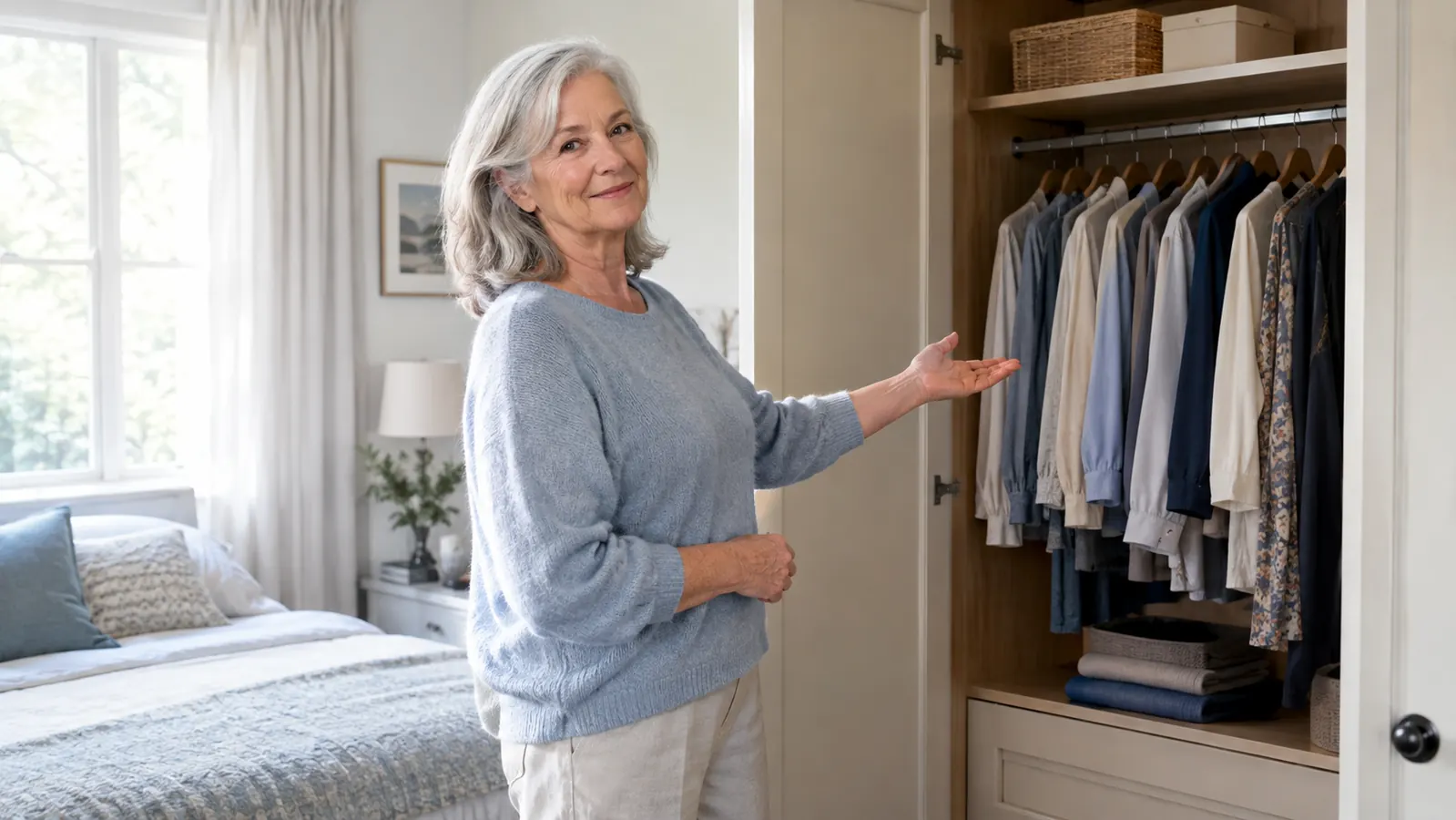
About 25 years of adjusting homeowners claims taught me one thing about hiding spots: the good ones are the ones the thief never reaches. I'm Theresa Valdez, a retired claims adjuster in Albuquerque, and I spent most of my career walking through houses after break-ins. I have seen the inside of a lot of closets, a lot of drawers, a lot of mattresses. After a while you learn where people hide things, and you also learn where burglars check first. The freezer. The sock drawer. The underwear drawer. The jewelry box on the dresser. The back of the closet shelf. The mattress, always the mattress. The lockbox under the bed that takes about forty seconds to carry out the door. And the master bedroom closet, which is the first place most thieves go.
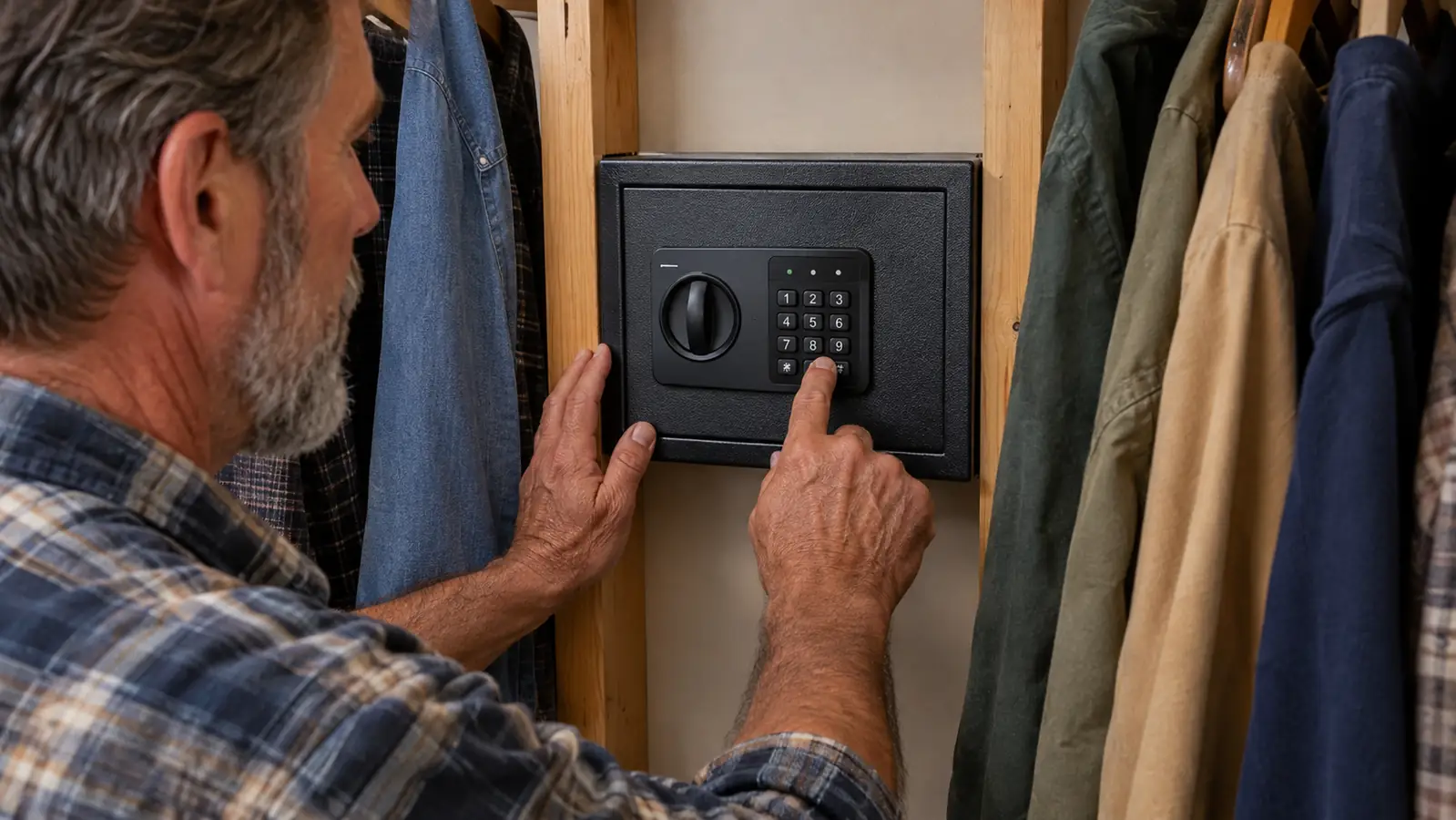
So when Ray and I decided to keep a little spare cash and a few small valuables at home, I did not want another box that could be picked up and carried. I wanted something attached to the house itself. That is how we ended up with the Paragon Lock & Safe in-wall safe with keypad, mounted between the studs in our bedroom closet wall, behind the hanging clothes. It has been there about six months now. I want to tell you how we chose it, what it was like to install, and what I would tell a friend who was thinking about doing the same.
The first thing I will say is that no safe makes a house burglar-proof. I have seen determined thieves defeat good safes, and I have seen lazy ones walk past a cheap lockbox because they were in a hurry. What a safe like this does is slow a person down and make your house less appealing than the next one. That is the honest version, and it is the one I believe.
The reason we chose an in-wall safe instead of another floor box is simple. Ray and I are not getting any younger, and I have seen too many claims where the lockbox went out the door with everything else. A safe bolted to a closet floor is better than a lockbox, but a safe that is literally part of the wall is harder to remove quickly. Ours sits between two studs in the bedroom closet, and with the clothes hanging in front of it, you would not notice it unless you knew it was there. That is exactly what I wanted.
A safe bolted to a closet floor is better than a lockbox, but a safe that is part of the wall is harder to remove quickly.
Stop hiding valuables in the spots burglars check first
The Paragon in-wall keypad safe mounts between the studs in your closet, so it stays put even if a thief finds it. Check today's price on Amazon.
Amazon Check Today's Price on Amazon →Installation took Ray about an afternoon. The unit is designed to fit between standard 16-inch stud spacing, and it comes with the hardware and the two manual override keys. Ray cut the opening, set the safe in, and secured it to the studs. I will be honest: if you are not comfortable with a stud finder and a drywall saw, this is a job worth paying someone for. If you are comfortable, it is very doable. The keypad takes a few seconds to program, and the override keys are tucked away in the hall closet in case the battery ever dies.

What goes in ours? Spare cash, a couple of small items I do not want in a drawer, and the backup USB drive with scanned copies of our important paperwork. The things I reach for often stay in the bedroom closet shelf safe, and the deed and titles stay in the larger fireproof safe in the hall closet. The in-wall safe is for the middle layer: things I want out of sight and out of the first places a thief looks, but that I do not need every day.
If you have been hiding things in the freezer or the sock drawer, I would gently suggest that you are not as original as you think. Burglars know those spots. They also know the master bedroom closet is where people keep the good stuff. A Paragon Lock & Safe in-wall safe does not make your house a fortress, but it moves your valuables out of the script. That is worth a lot on a Tuesday afternoon when you are not home.
What I'd Tell You If We Were Sitting at My Kitchen Table
Here is what I would say over coffee. First, decide what you are actually protecting. If it is paperwork, a fireproof safe matters more than a hidden one. If it is small valuables and spare cash, a hidden in-wall safe is a very reasonable choice. Second, bolt it or mount it. A safe that can be carried is a box, and burglars carry boxes. Third, tell somebody you trust where the override keys are. I have seen too many widows and widowers unable to get into their own safe because the spouse who knew the code was gone. And fourth, keep a list of what is inside, with serial numbers and photos, somewhere off site. That list is what makes a claim easy instead of a nightmare.
I am not here to sell you on the idea that any safe will stop a determined professional. It will not. But most break-ins are not professionals. They are people looking for a quick score, and they check the same few spots every time. The Paragon Lock & Safe in-wall safe takes your small valuables out of those spots, and it does it without taking up floor space or announcing itself to every guest who opens the closet. For us, that has been exactly the right trade.
The hiding spot burglars never get to first
A Paragon Lock & Safe in-wall safe mounts between the studs, behind the clothes, out of the usual script. See today's price on Amazon and decide if it fits your closet.
Amazon Check Today's Price on Amazon →